Route of the day
All points shown were part of the original itinerary. Not all were visited — decisions made along the way are a natural part of any expedition. We kept them on the map in case you wish to explore them yourself.
What we lived
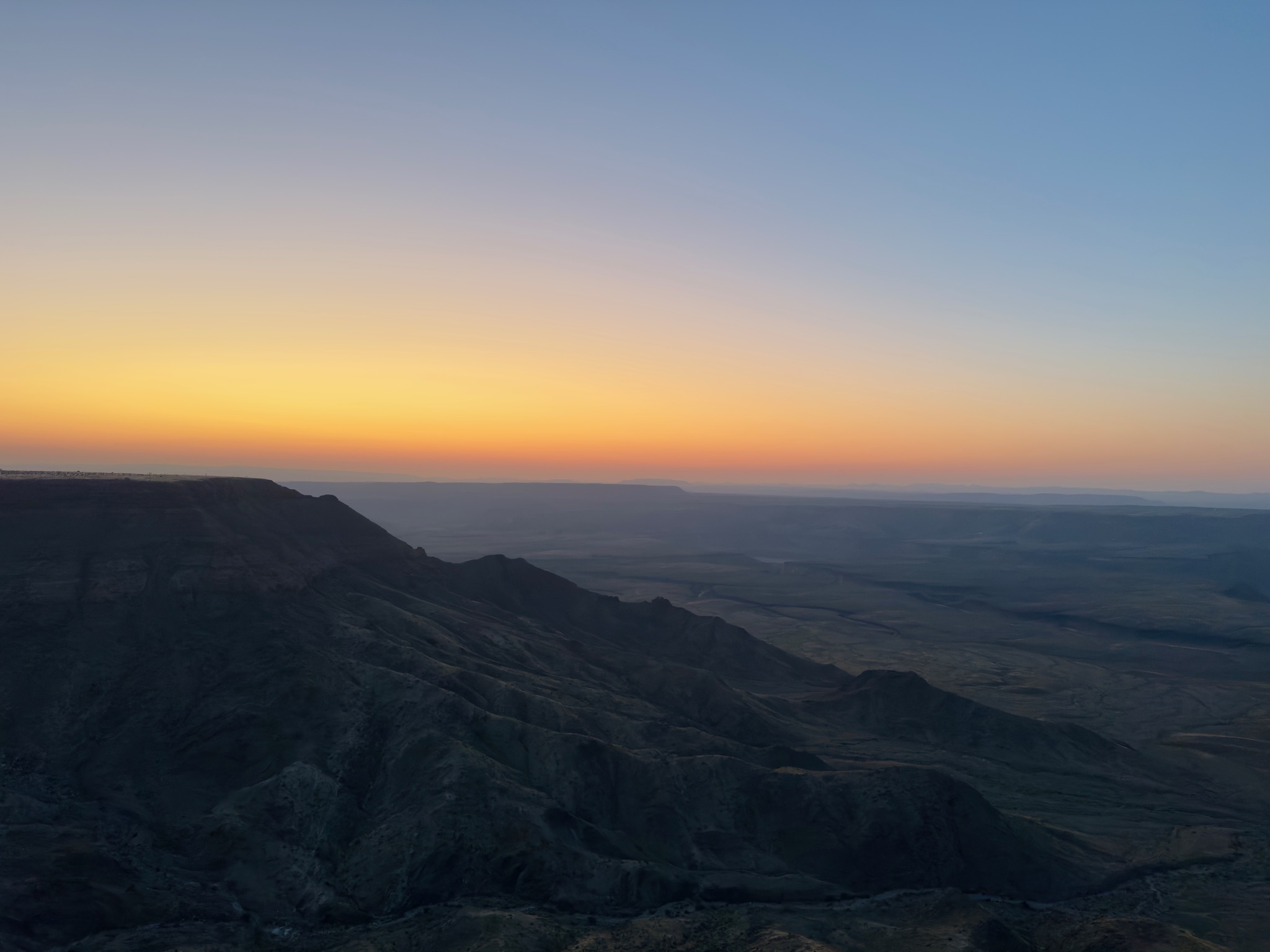
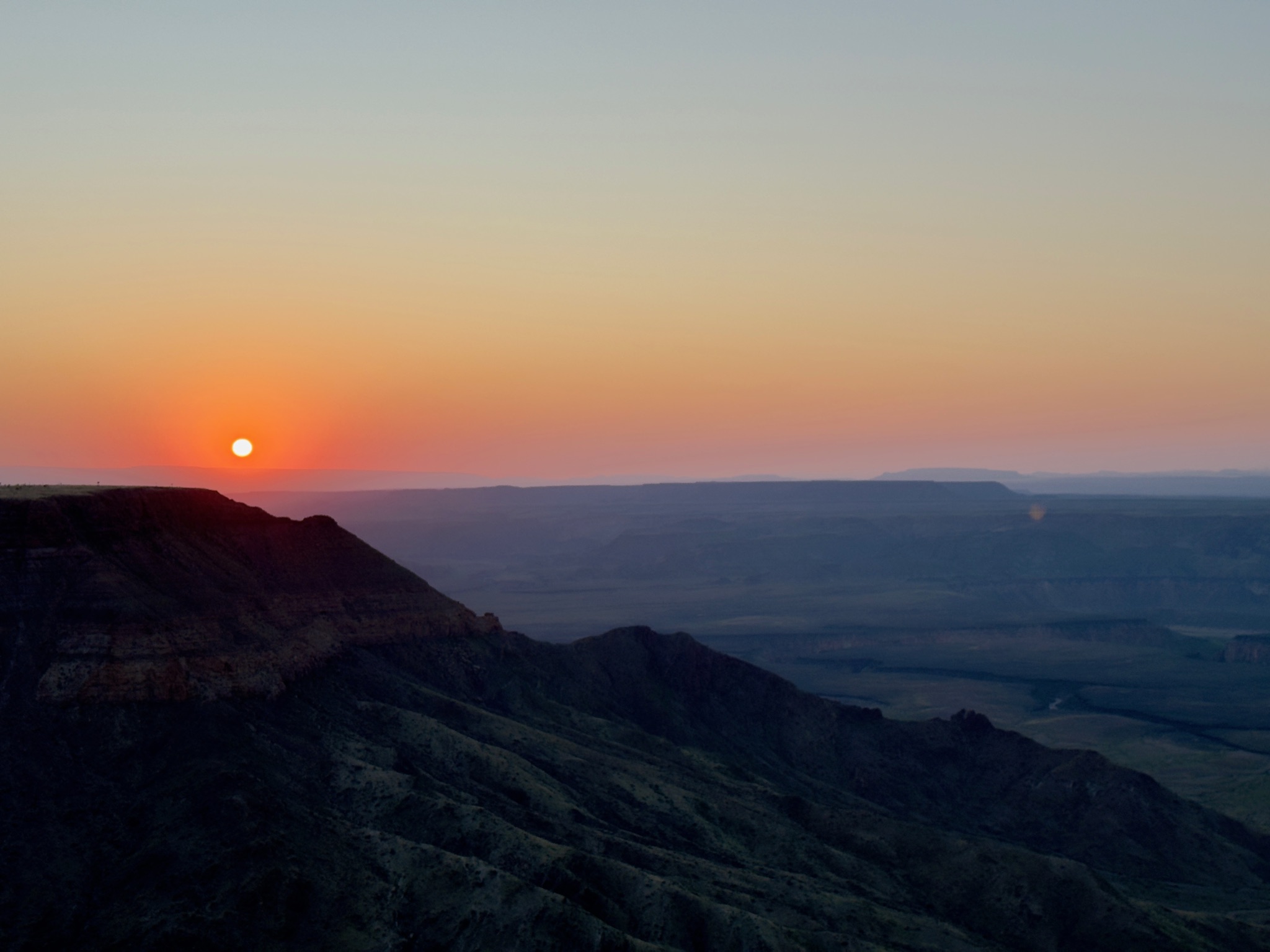
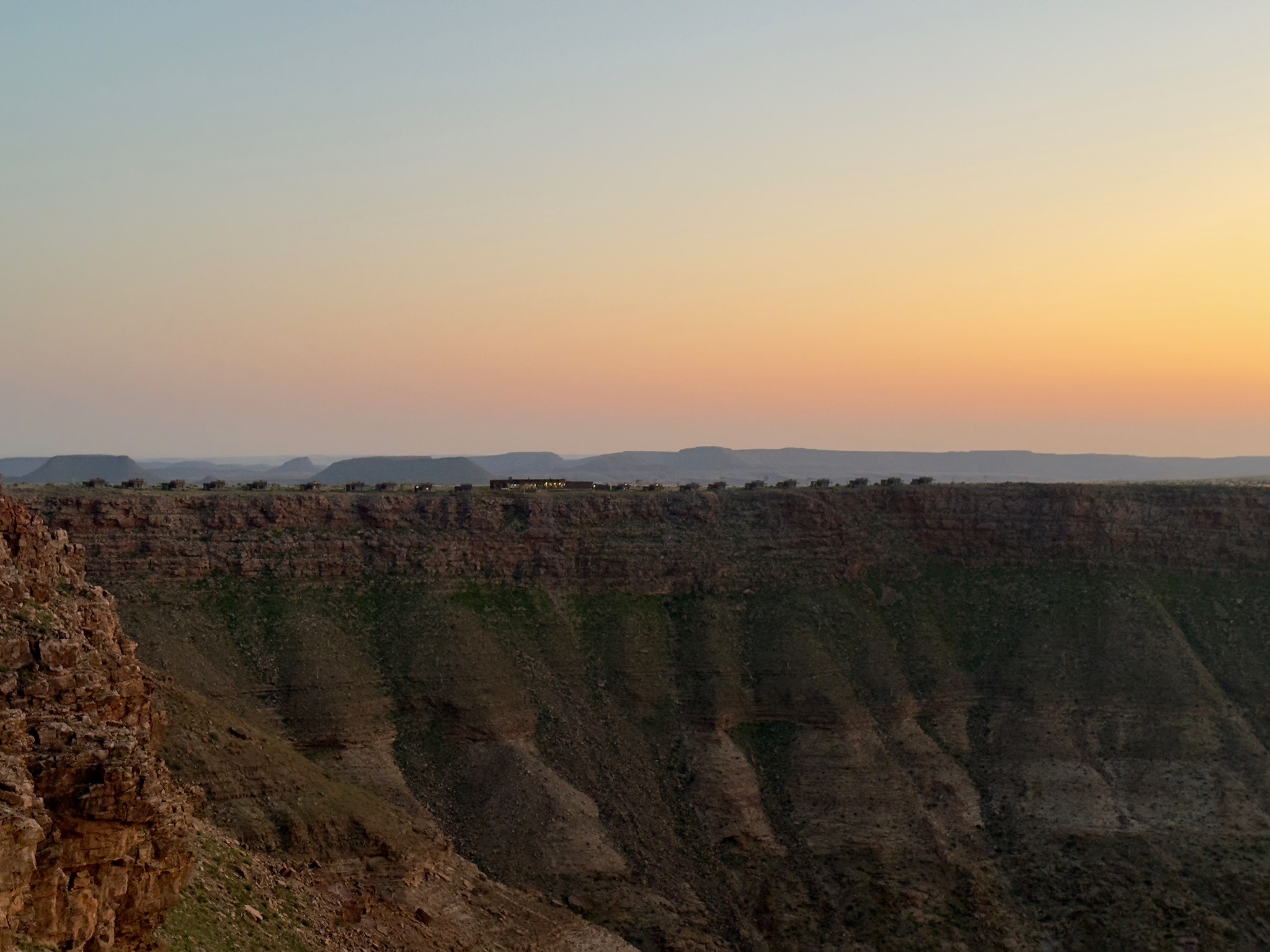
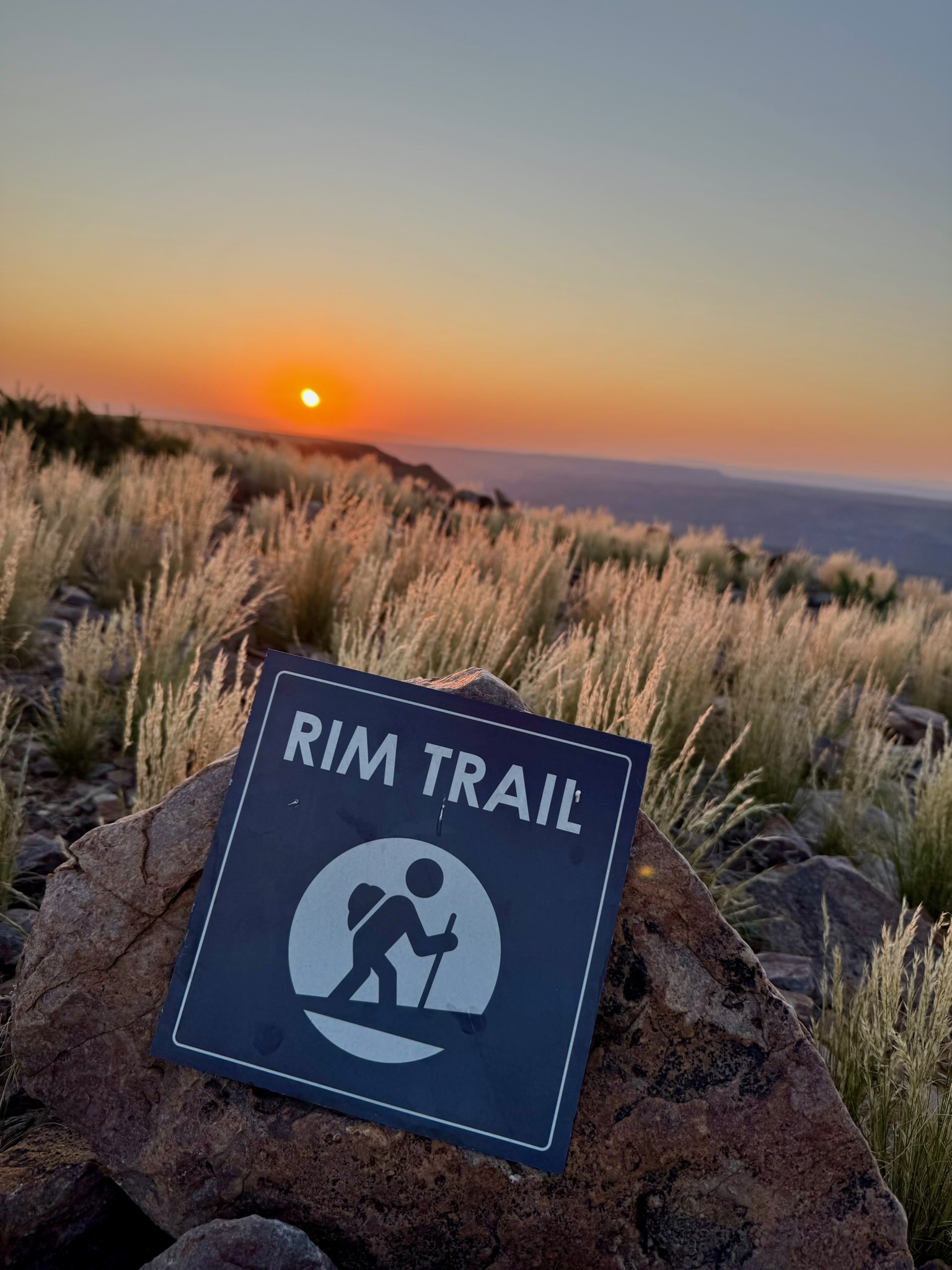
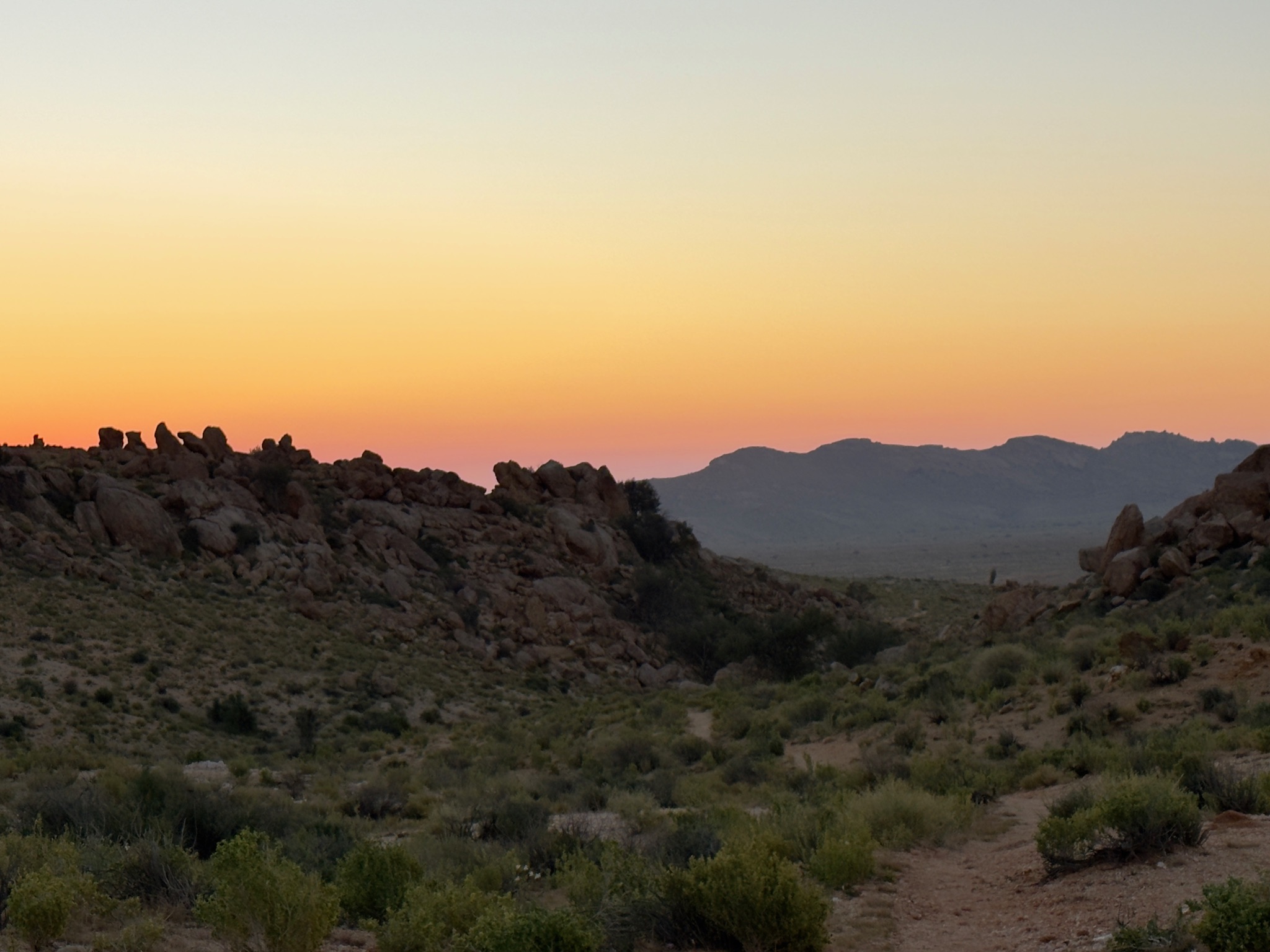
Day six started early again — up at 6:30 for a short two-kilometre walk provided by the Fish River Lodge, ending at a bench with a view that made the early alarm worthwhile. We watched the sunrise from there before heading back for breakfast.
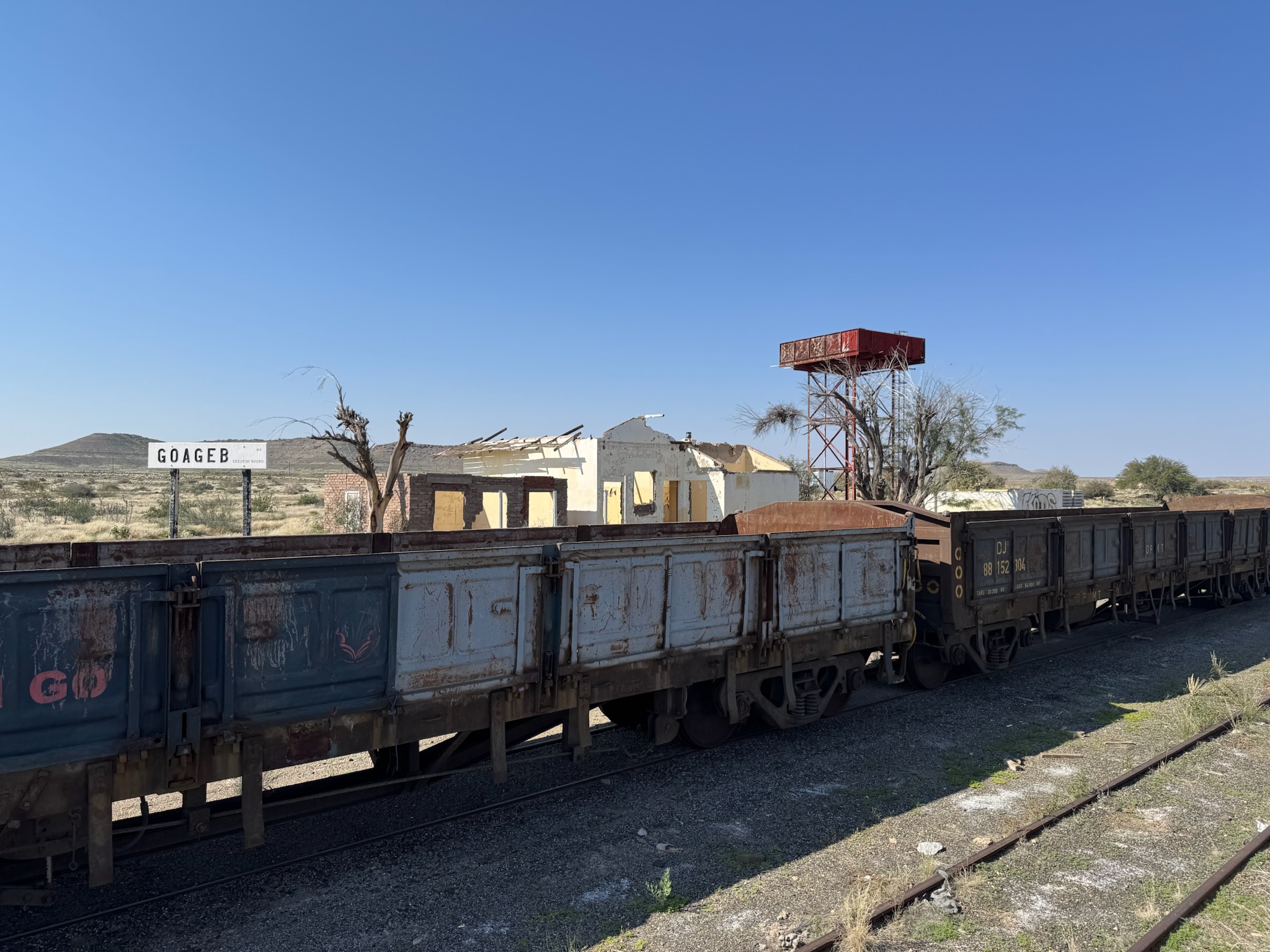
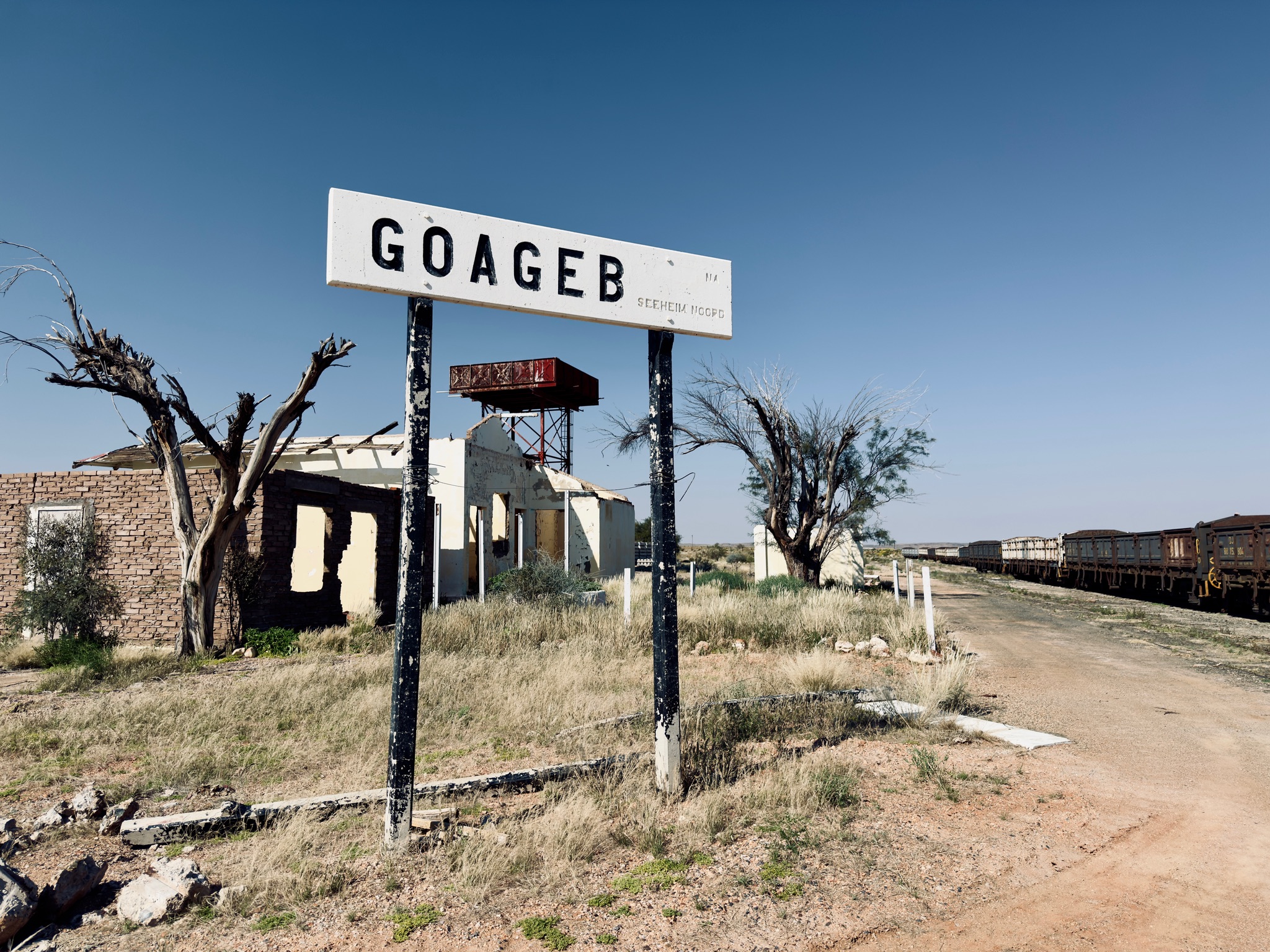
We left around nine, with our first stop at Goageb — a former mining town, once built around Namibia's mineral extraction industry, now completely abandoned. A genuine ghost town.
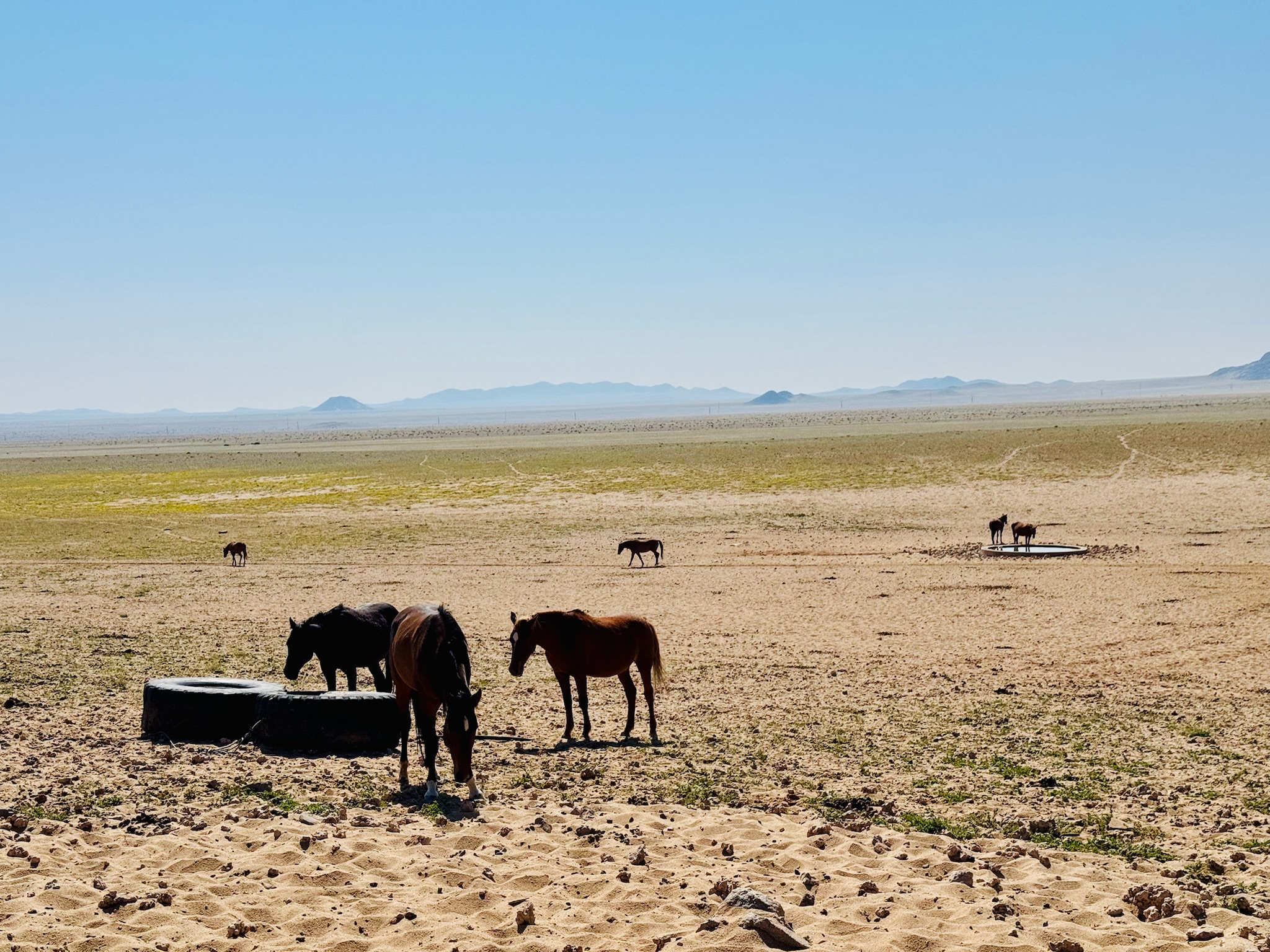
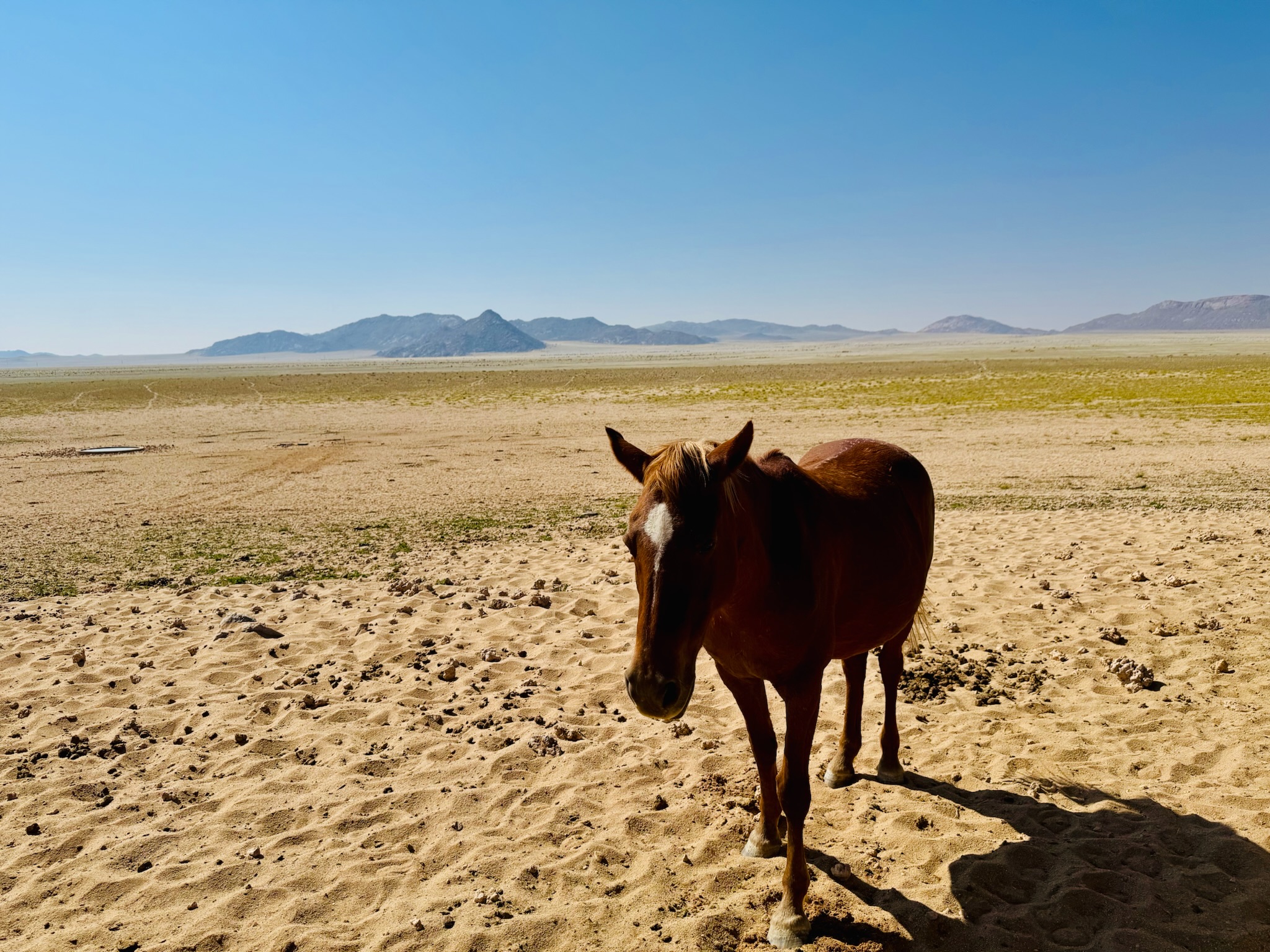
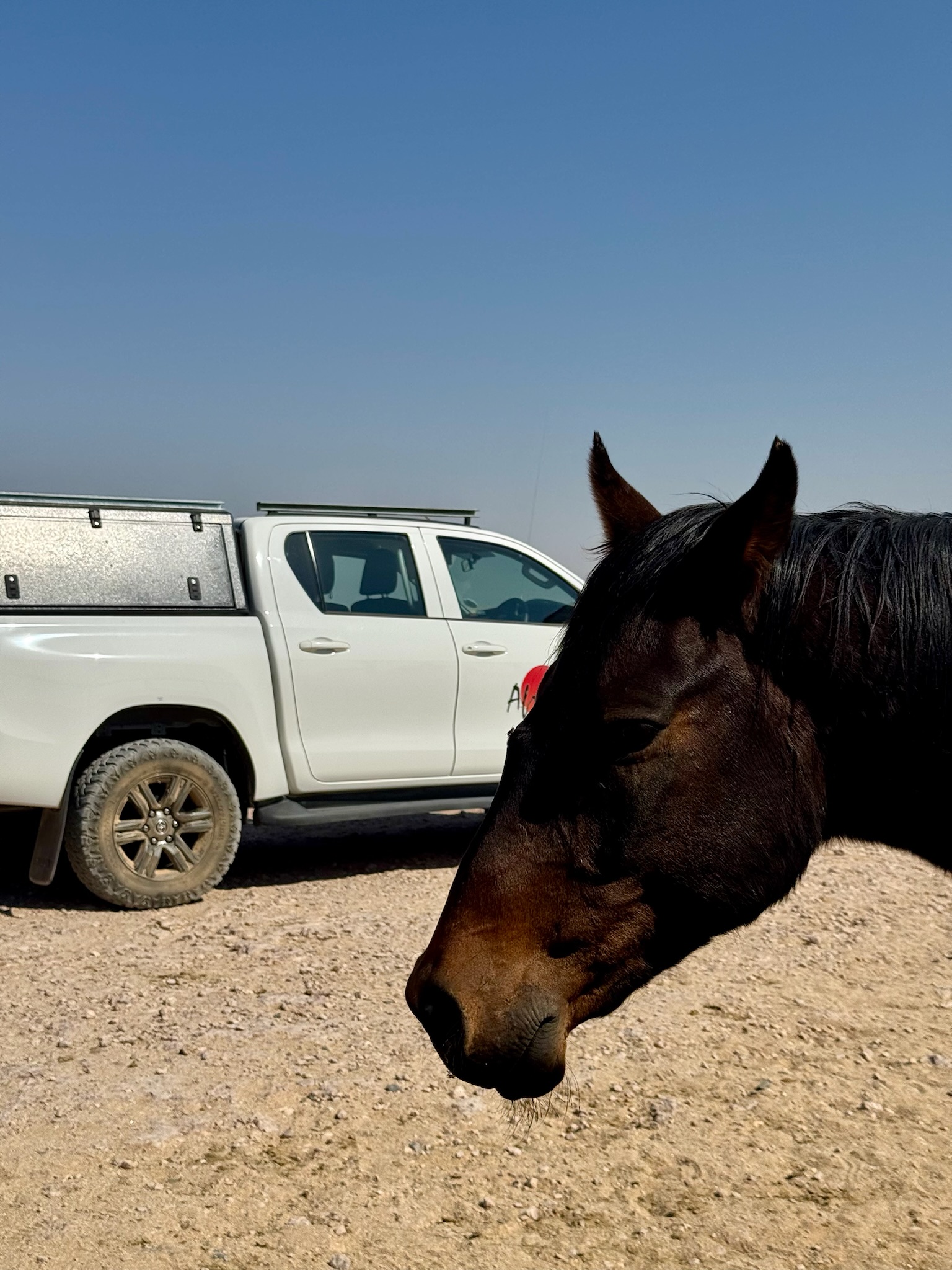
From there we drove to Garub to see the wild horses of the Namib. Spotting them on arrival is never guaranteed — you wait, and hope they come to you. We got lucky. The horses appeared, and at one point two of them began sparring with each other. One of those unexpected moments that stays with you.
Lunch was a roadside affair — one of Namibia's many merendeiros, the signposted picnic stops dotted along the main roads, each with a table, chairs and shade. We used the cooking equipment from the AfriCar jeeps and ate well.
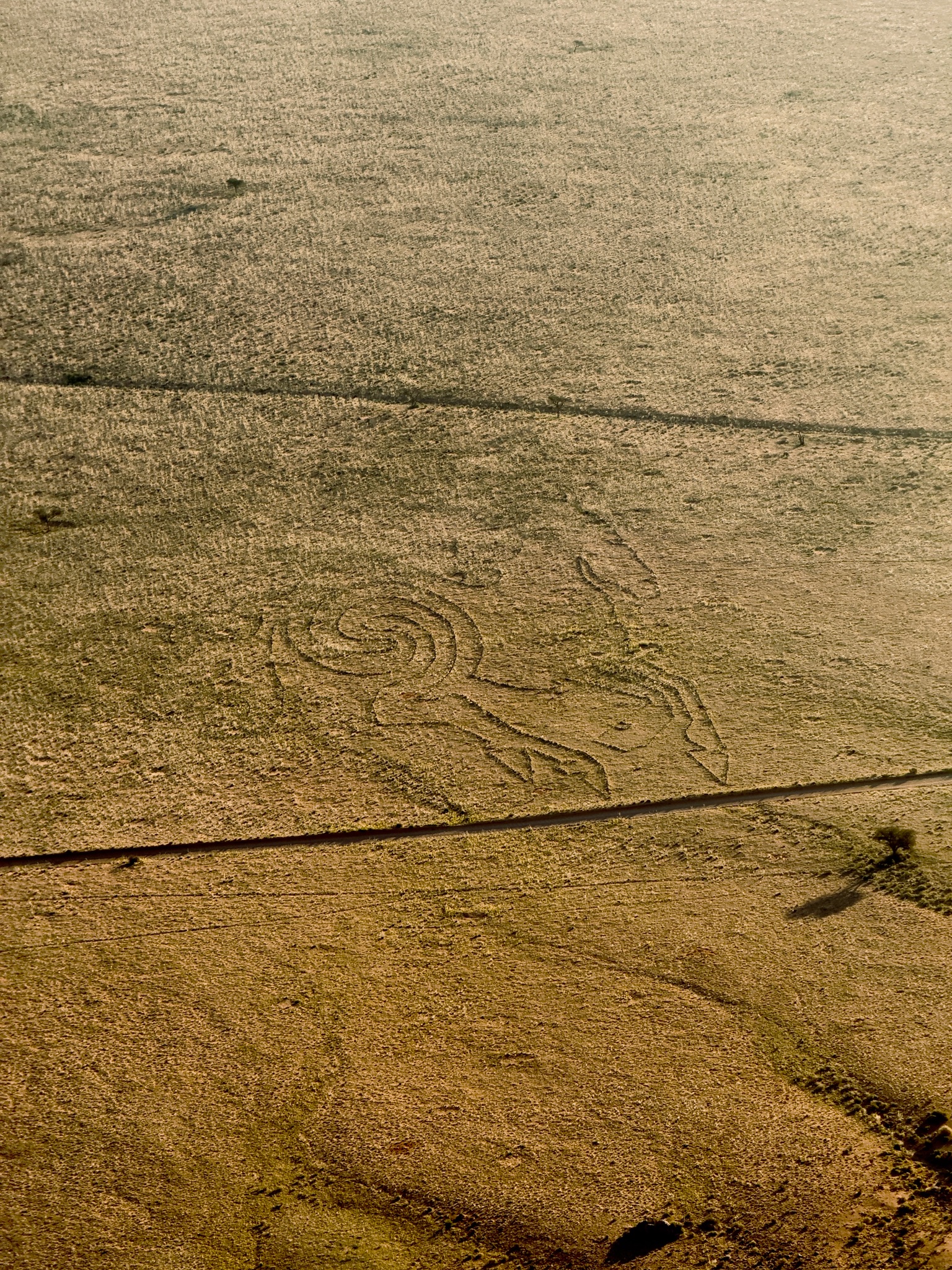
The afternoon brought us to Gondwana Klein Aus Vista, our lodge for the next two nights. Shortly after check-in, on the way to our rooms, a desert rat appeared — our first. We didn't linger on it, but it set the tone. After settling in, we set off on what was described as an easy walk — seven kilometres to a viewpoint on top of a hill, where the Horse of Aus comes into view: a horse-shaped outline laid out entirely from hand-placed stones on the hillside below. Dinner was very good, and the evening closed with a round of poker.
Photo of the day
Video
Video
Gallery
Our tips
The Garub wild horses are not guaranteed — bring patience. The viewing shelter at the waterhole gives you a good vantage point without disturbing them. Namibia's merendeiros are genuinely useful: signposted with distance markers on the main roads, they appear regularly and are a far better lunch option than trying to find a restaurant in the middle of nowhere.
Did you know?
The wild horses of Garub are one of the few feral horse populations in Africa, and arguably the most remarkable — surviving in one of the driest environments on Earth. Their exact origin is debated, but the leading theory traces them to breeding horses from the Kubub farm near Aus, later joined by cavalry horses that scattered when a German aircraft bombed a South African military camp at Garub in 1915. Around 1,700 horses were reportedly dispersed — some remained, adapted to desert life, and never returned. Today the herd numbers between 90 and 150. They survived for decades protected unknowingly by the restricted Sperrgebiet diamond mining zone, which kept hunters out.
Tomorrow we head to...
Lüderitz and Kolmanskop