Route of the day
All points shown were part of the original itinerary. Not all were visited — decisions made along the way are a natural part of any expedition. We kept them on the map in case you wish to explore them yourself.
What we lived
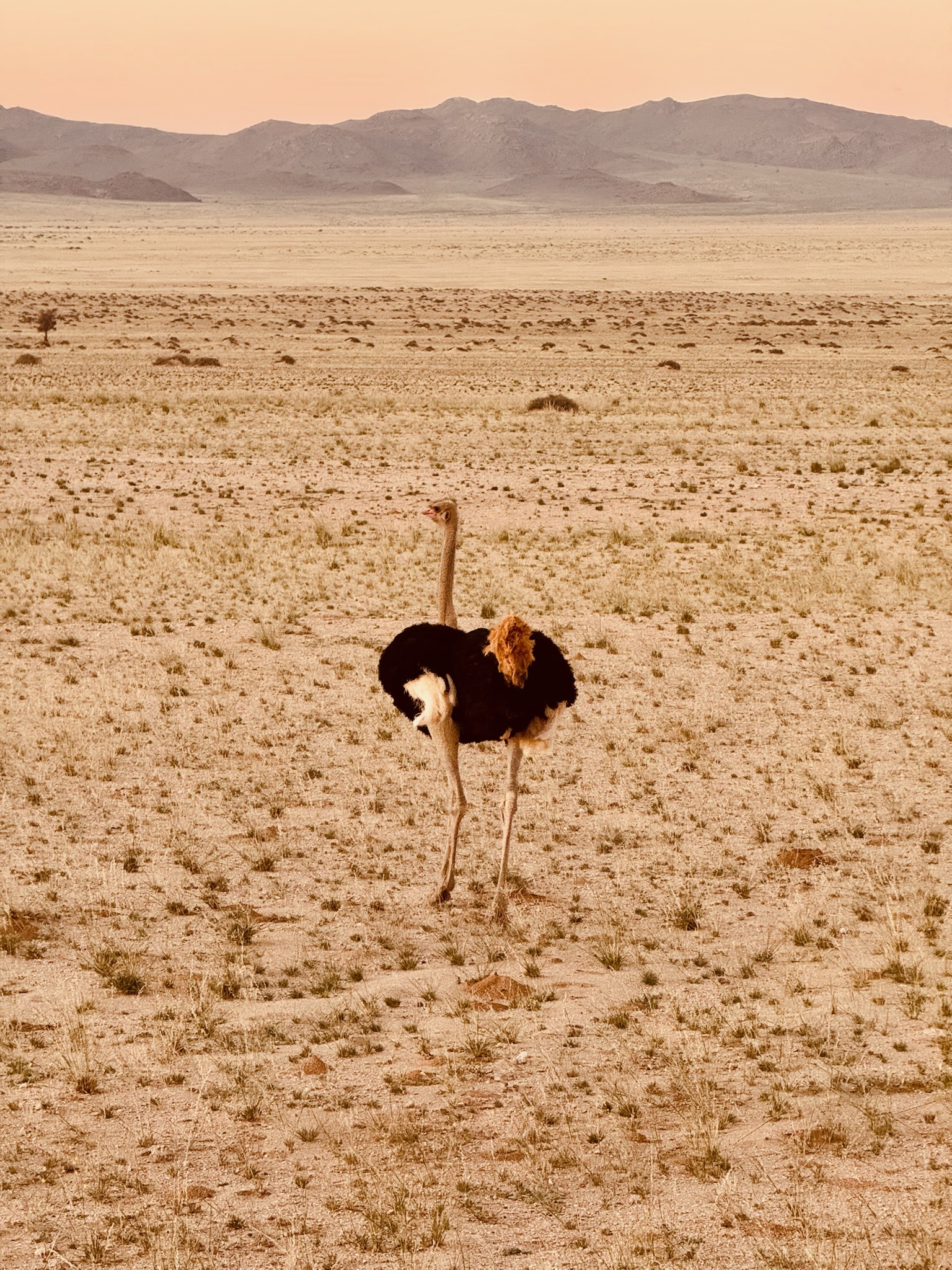
We were up at six, breakfast at seven, and on the road by eight. The drive from the lodge to Kolmanskop was roughly 120 kilometres, passing through Lüderitz — just five kilometres from Kolmanskop itself — and along the way we spotted a few ostriches.
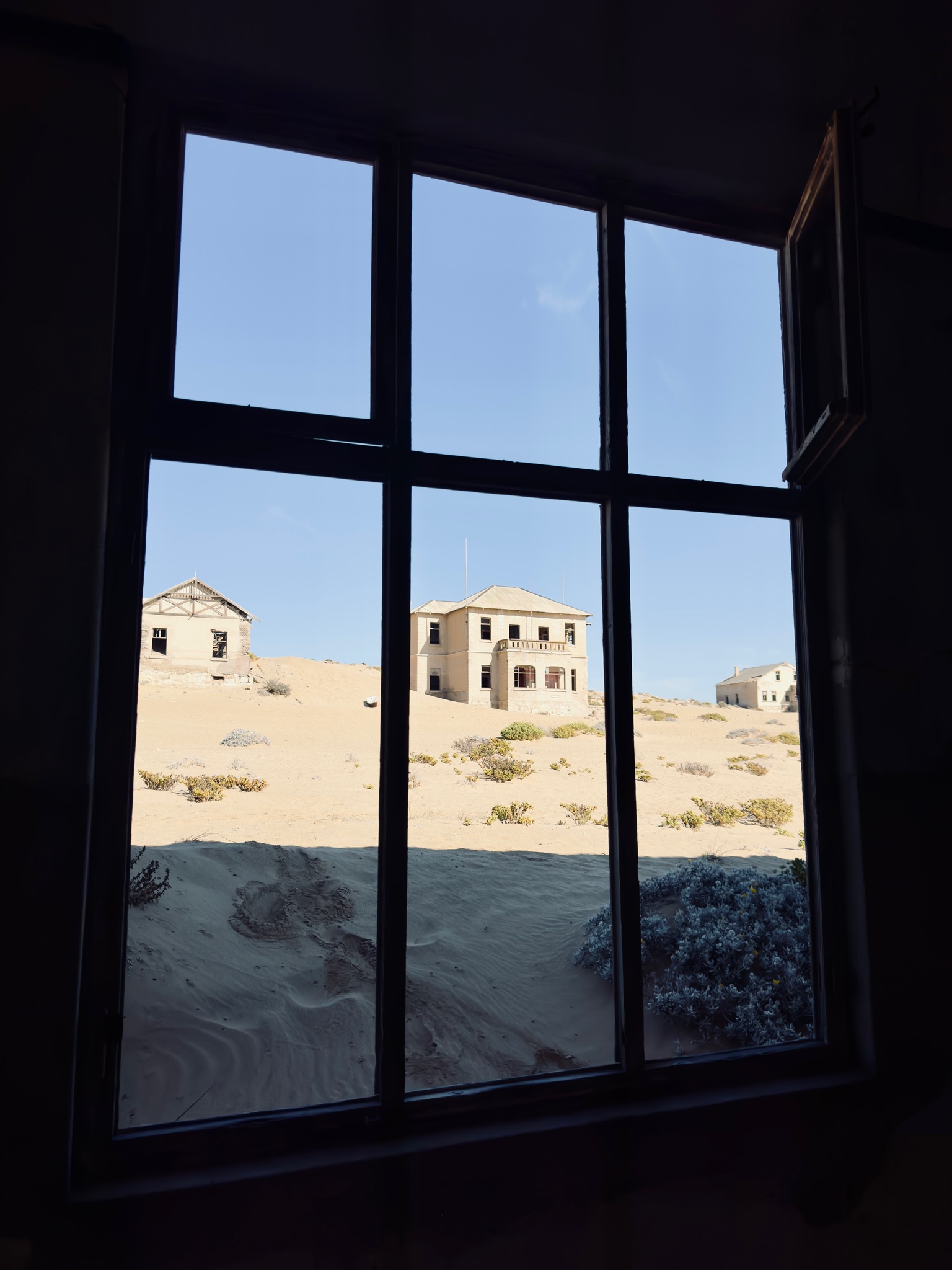
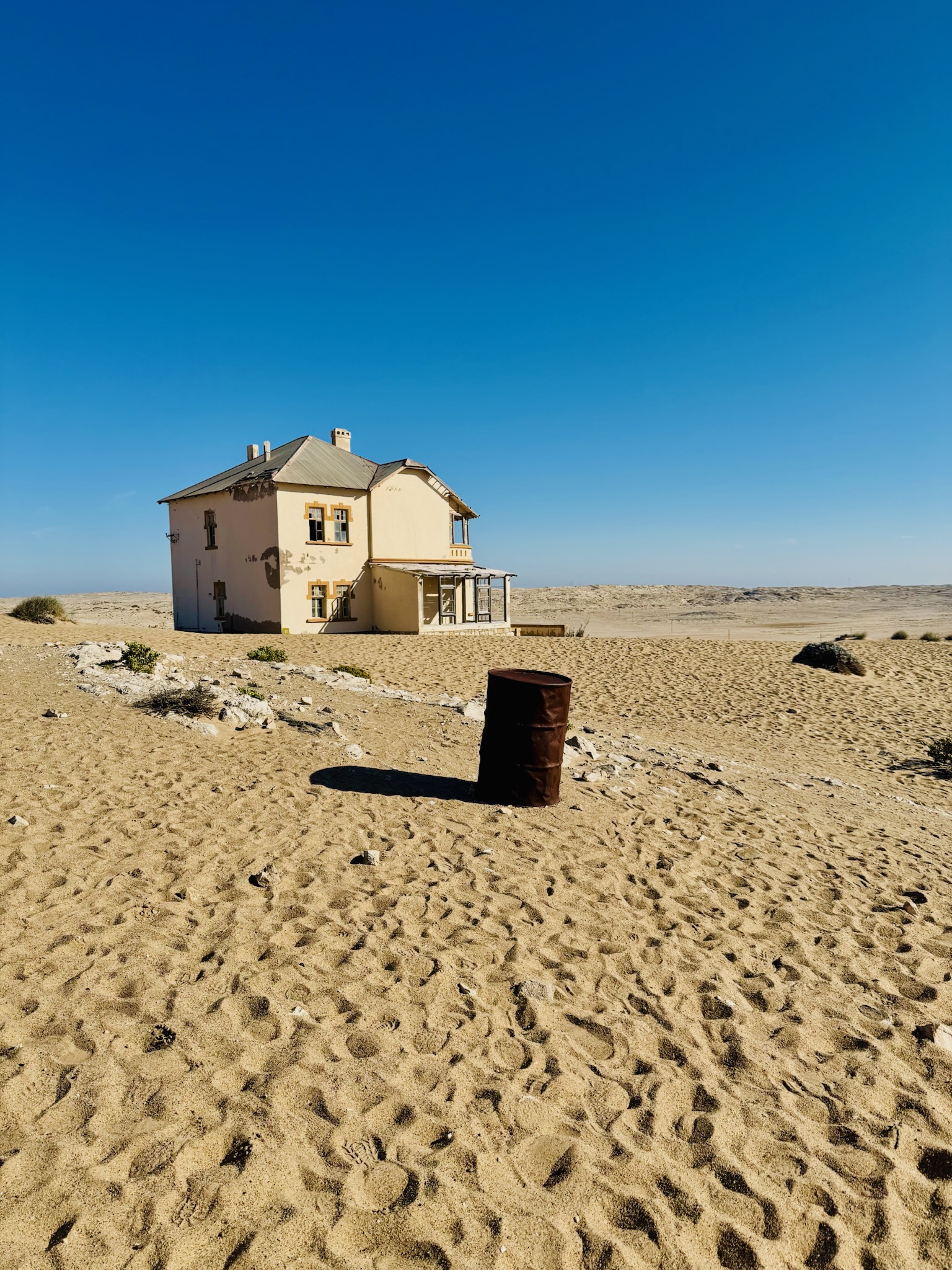
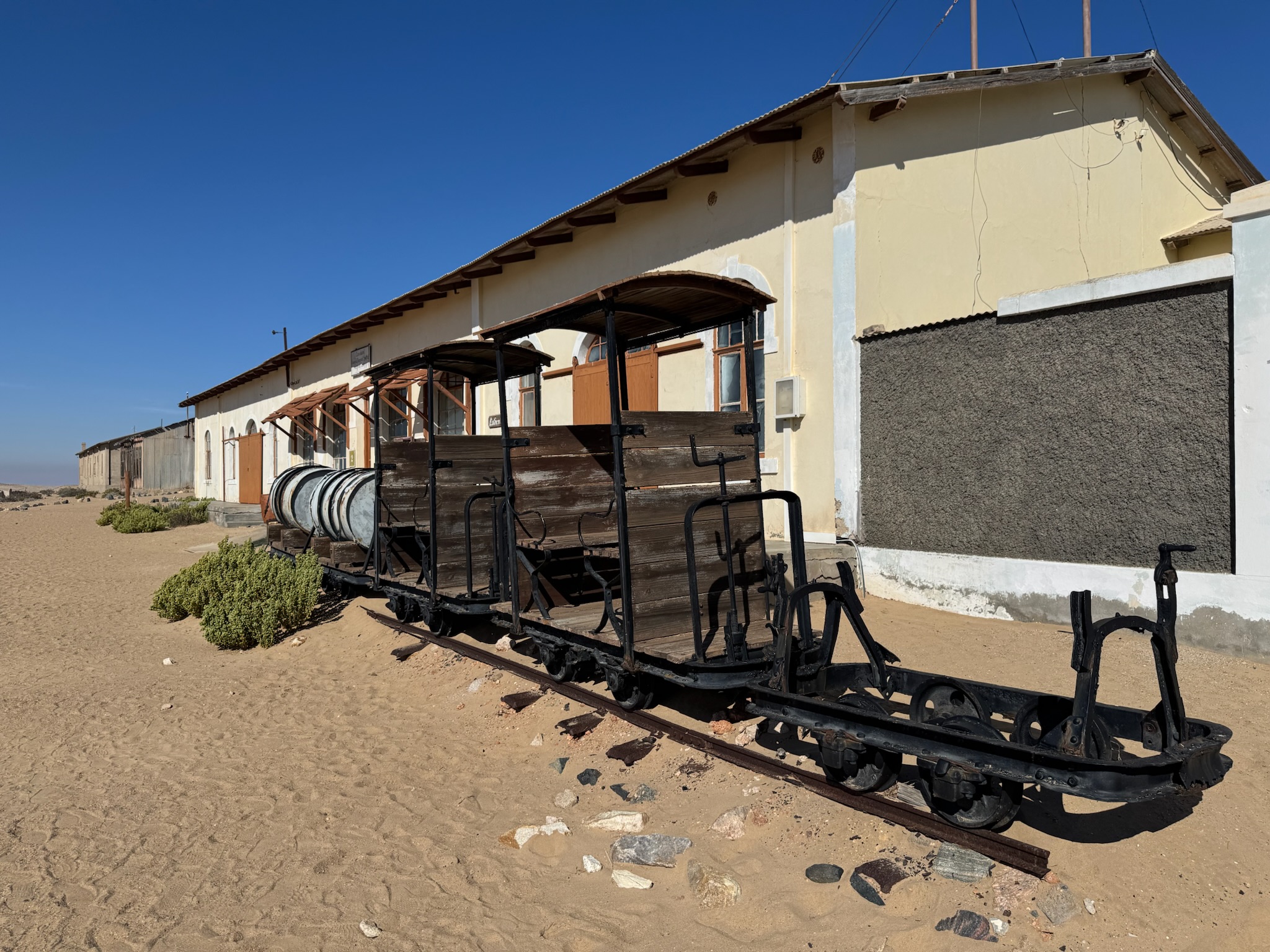
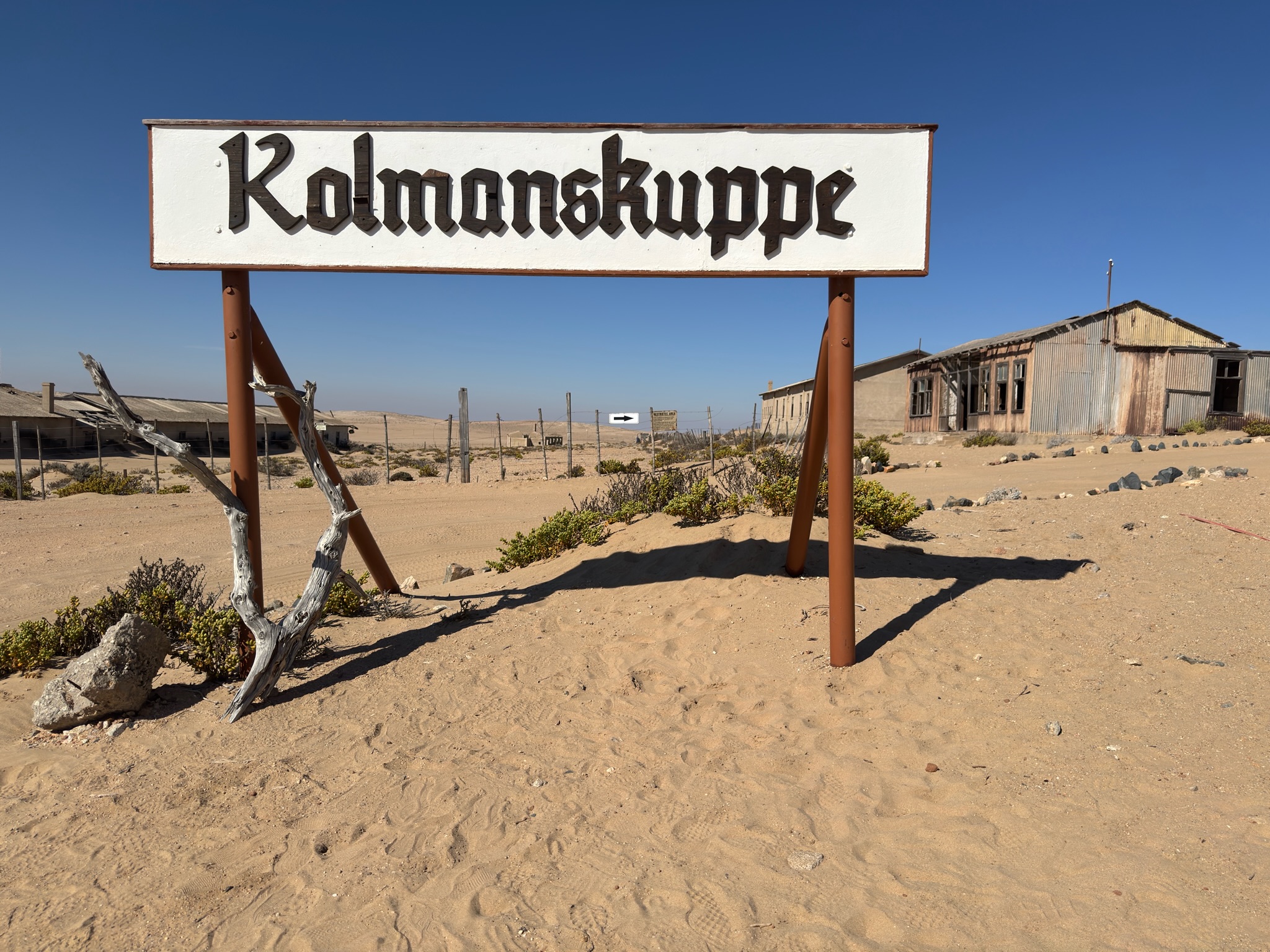
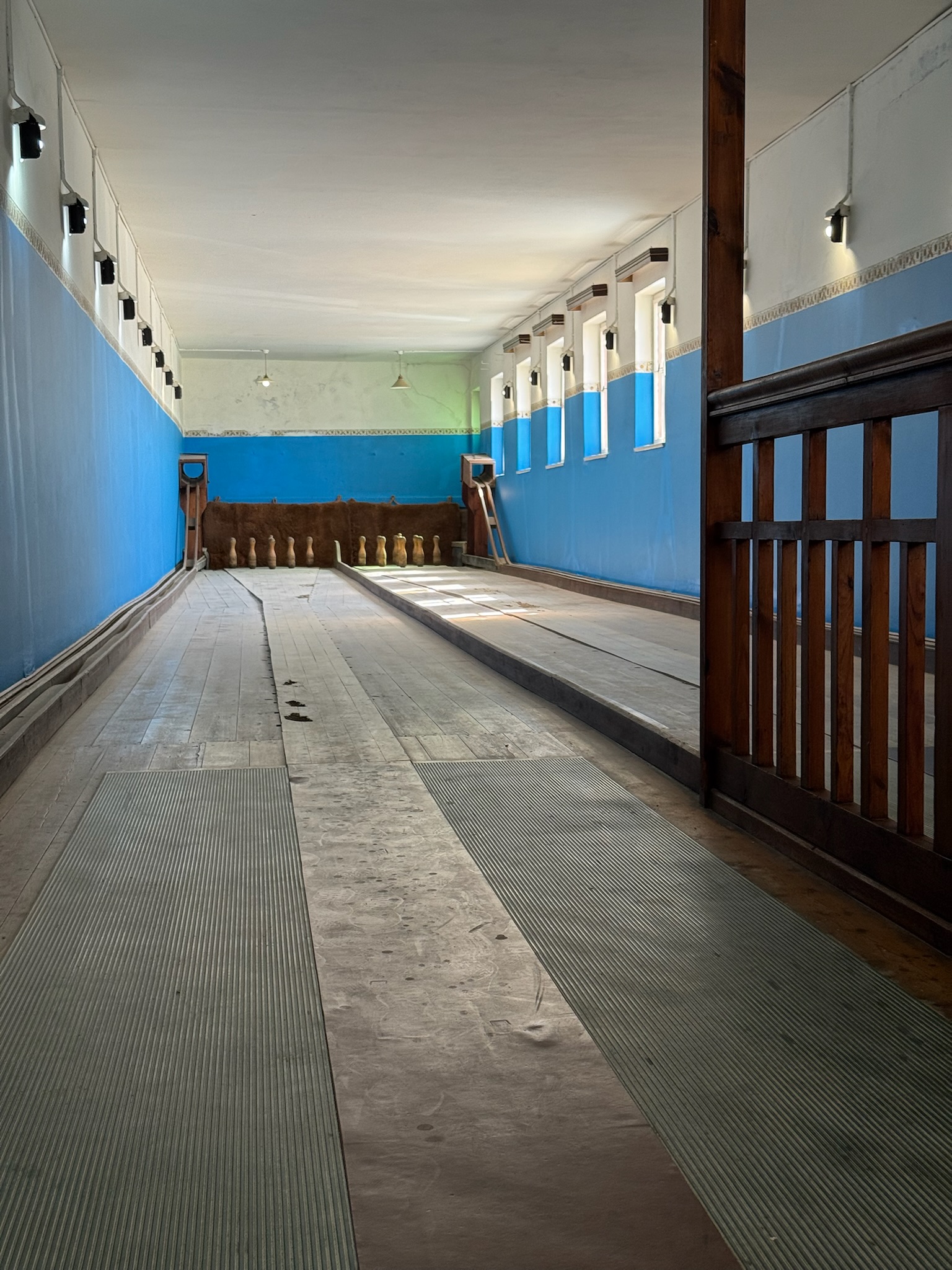
Kolmanskop was founded in 1908 when a railway worker found a diamond lying on the ground. Within four years it had become one of the richest towns in the world per capita — home to 1,300 inhabitants, a hospital, ballroom, theatre, casino, bowling alley, ice factory, and the first tram in Africa. The German settlers who ran the diamond operation lived well. What remains today is the opposite of that: sand-filled rooms, collapsed ceilings, facades held up by memory rather than structure. We joined a guided tour through the village. It is one of those places that is genuinely difficult to leave.
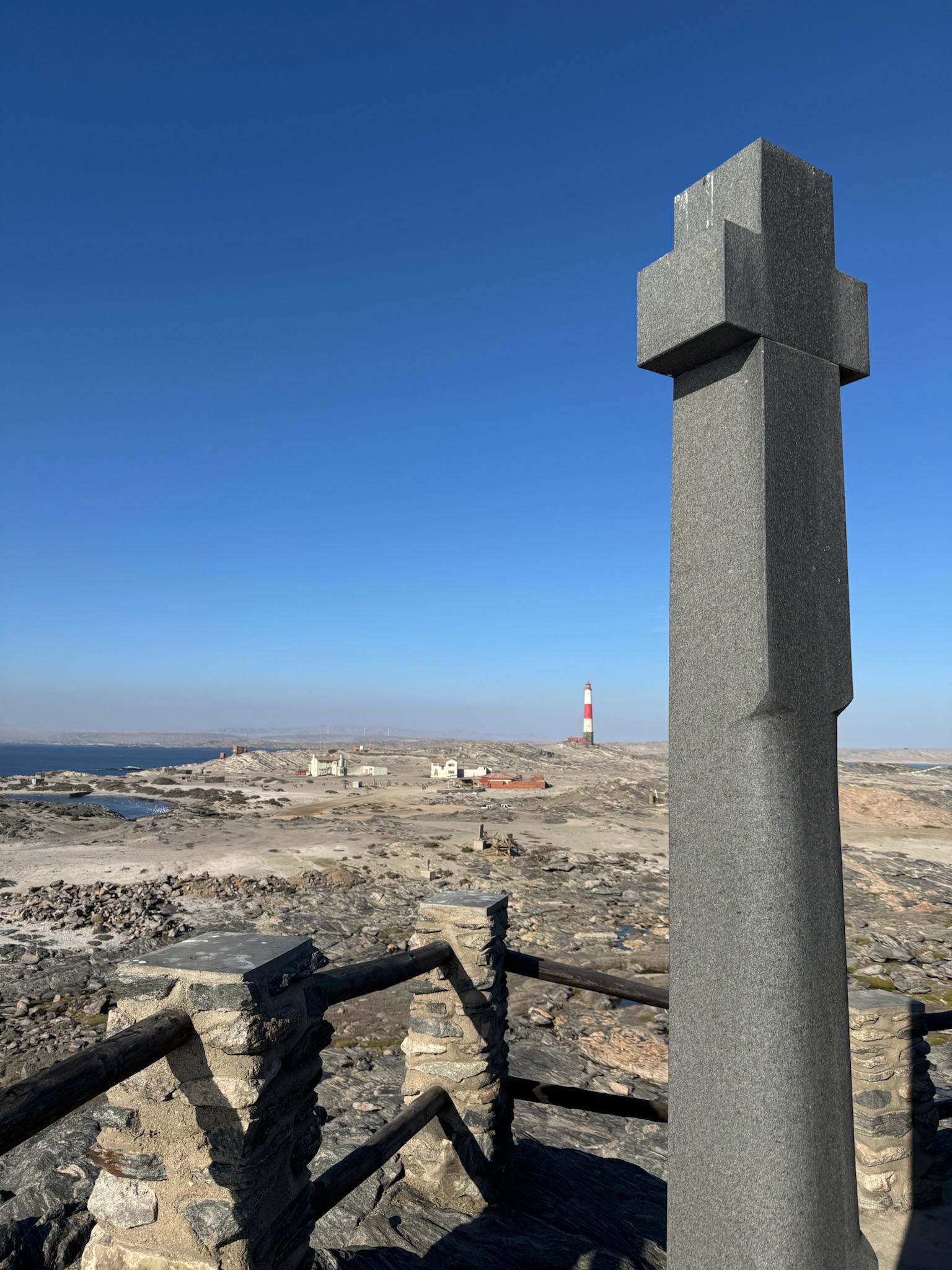
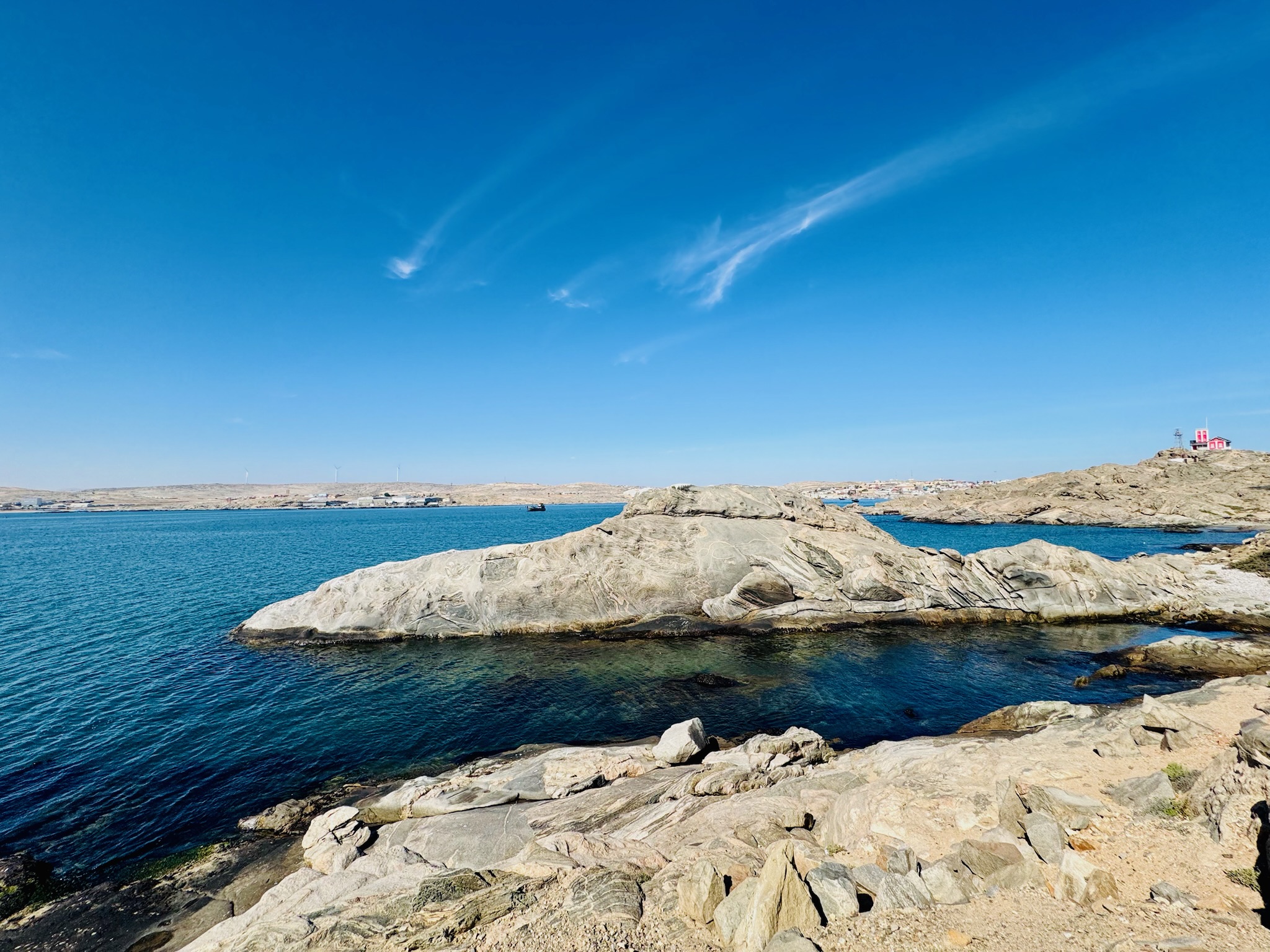
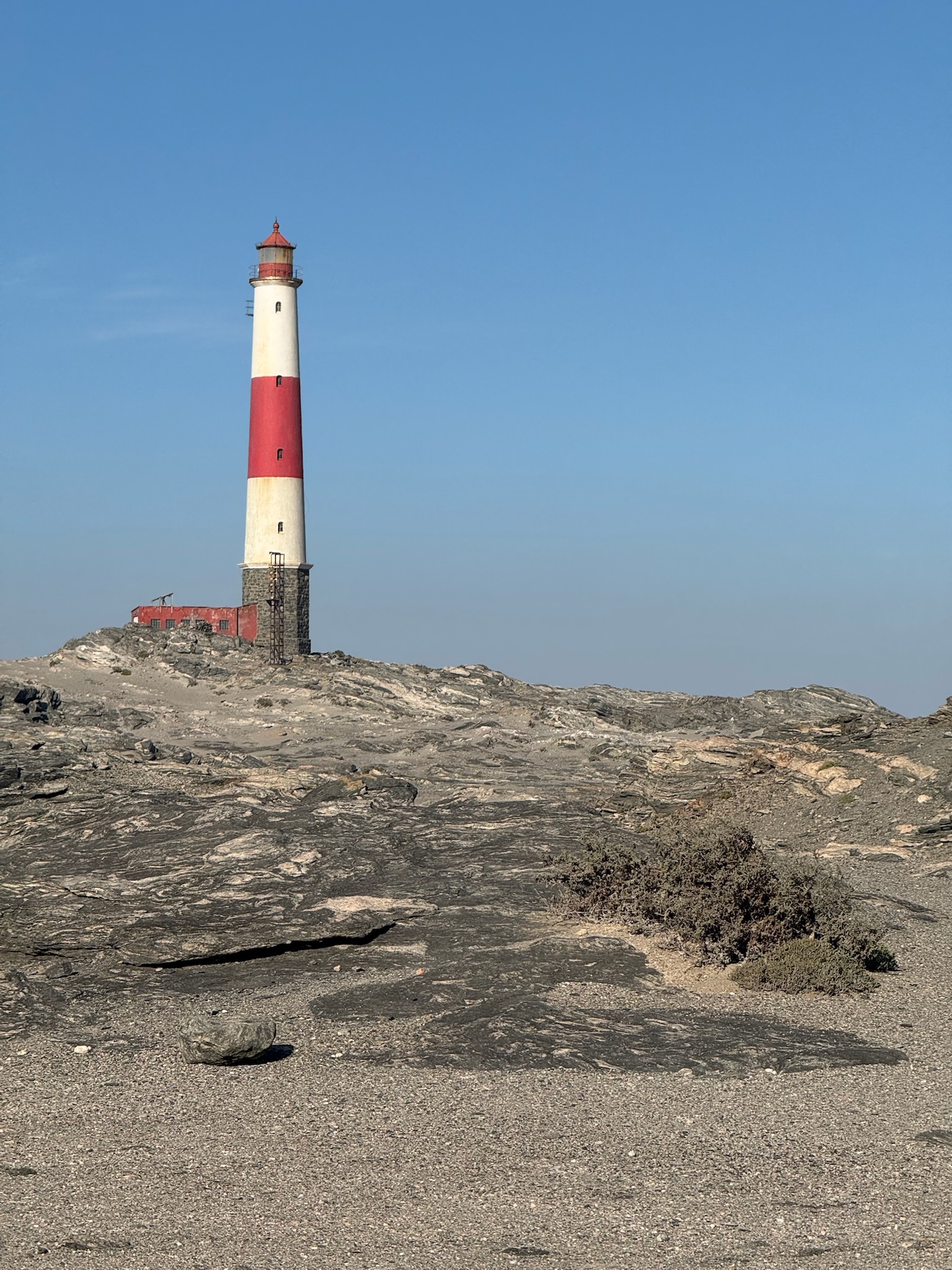
Back in Lüderitz, we had lunch at Shark Island — a viewpoint named for a rock that does, unmistakably, resemble a shark. From there we finally resolved our radio problem — after several workshop visits, they now work reliably up to around five kilometres. A quick stop at the local Spar for supplies, and then on to Diaz Point, marked by a cross and the Padrão dos Descobrimentos left by Bartolomeu Dias when he became the first European to chart this stretch of coast — a place he named Angra Pequena, a name that covered the whole coastal zone including Lüderitz and Kolmanskop. From the point we watched a colony of seals on a nearby island, then found a vantage to spot the penguins on Halifax Island. With the checklist complete, we made our way back to Gondwana Klein Aus Vista for dinner and another round of board games.
Photo of the day
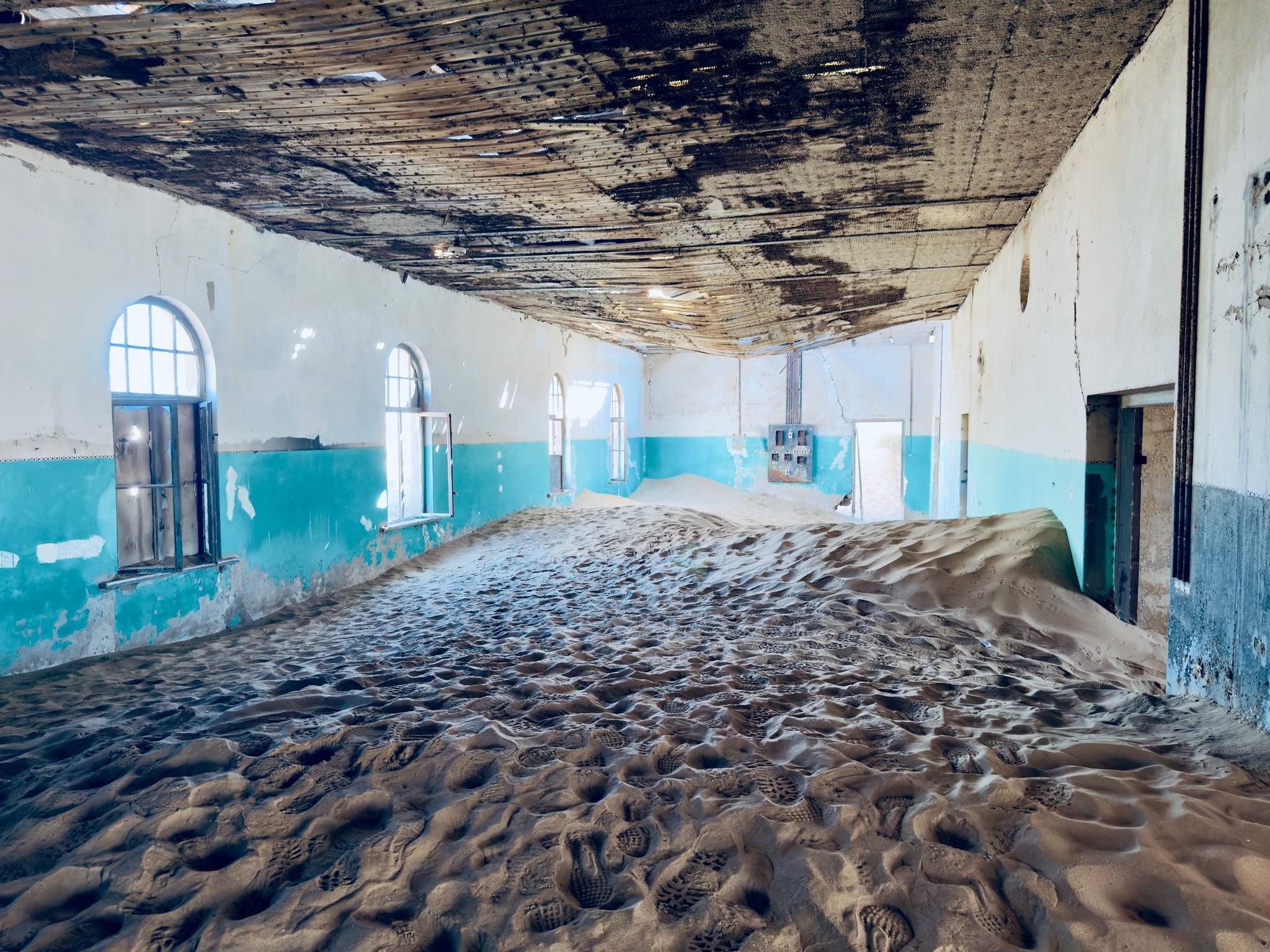
Gallery
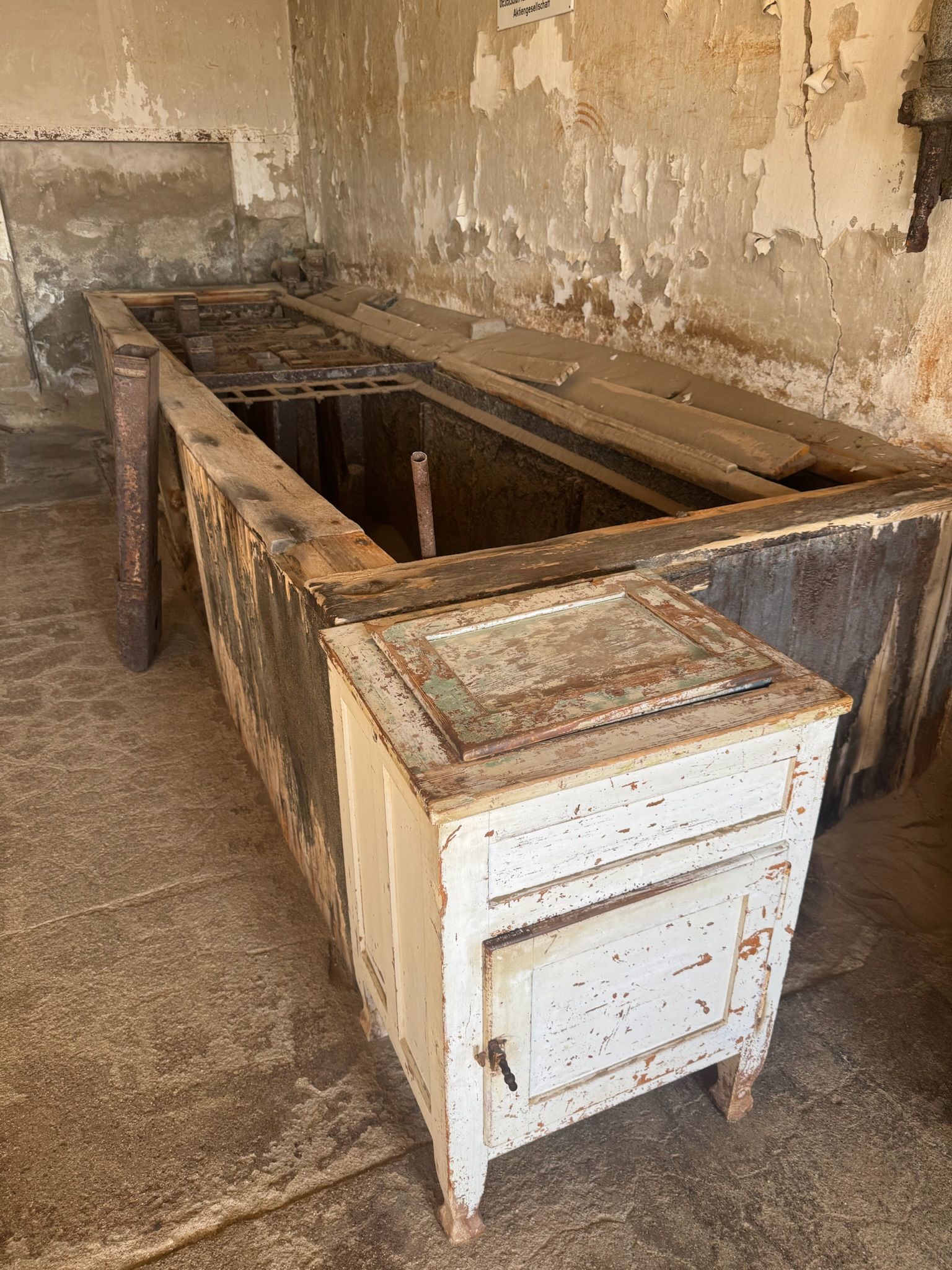
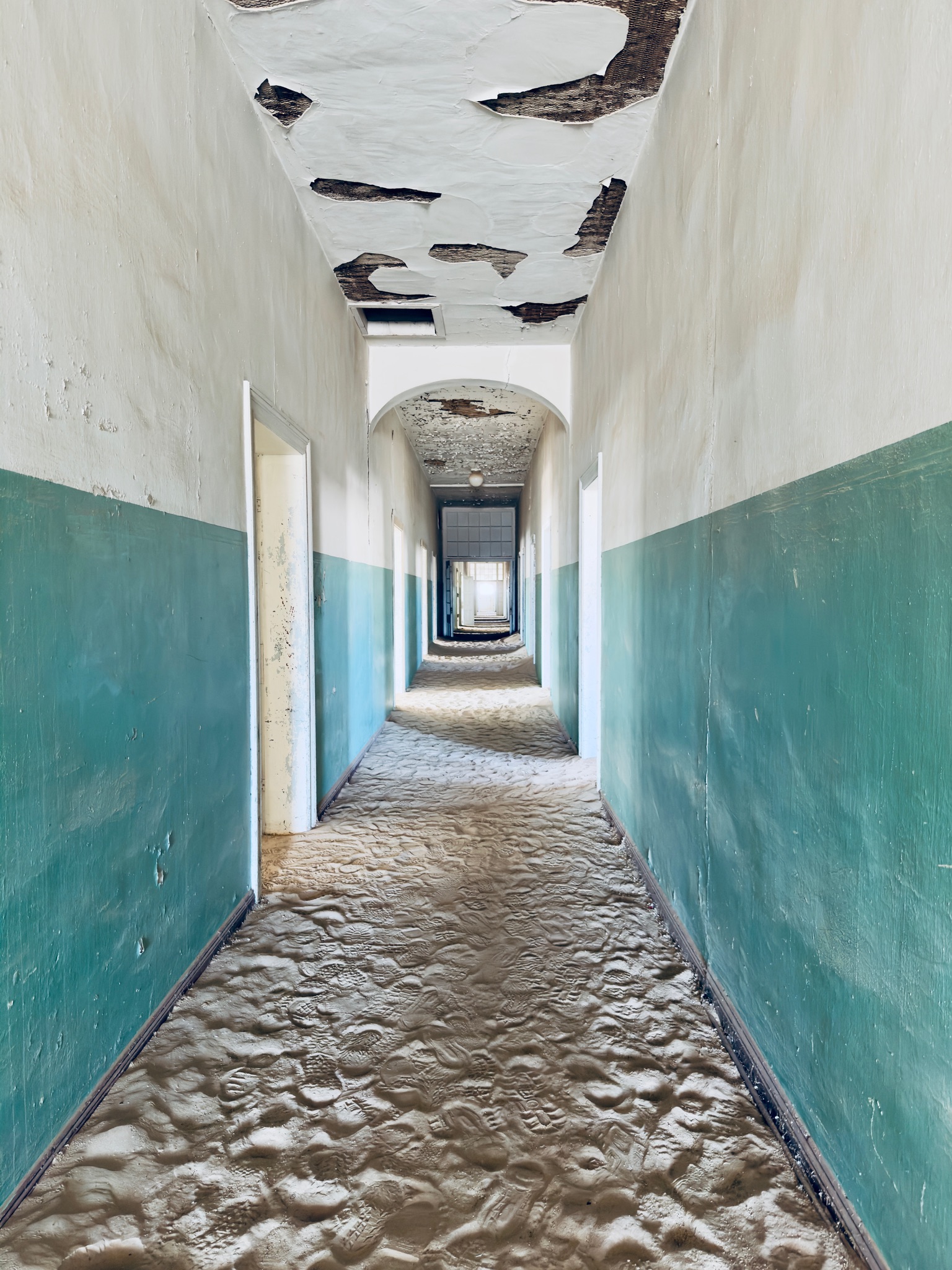
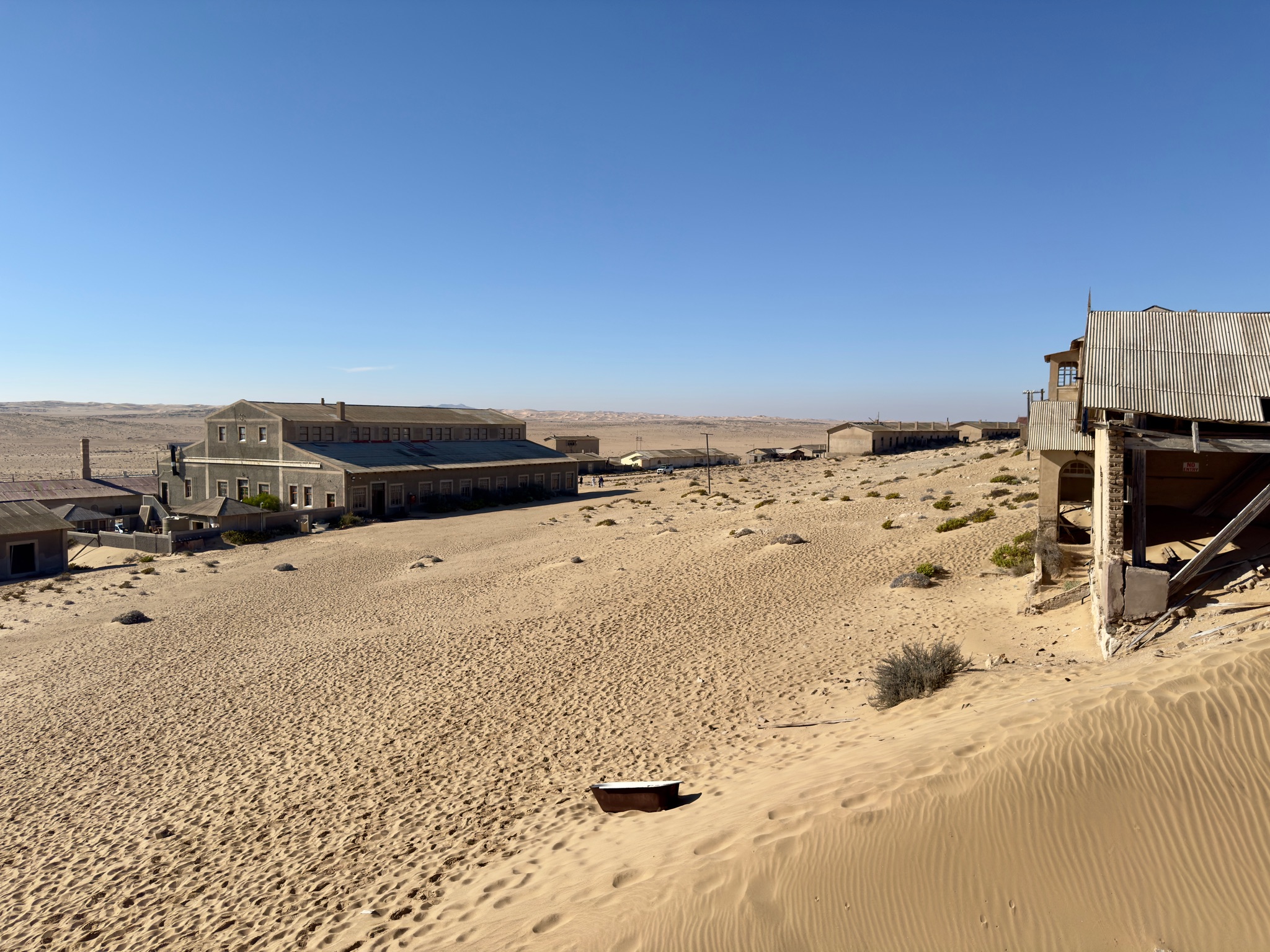
Our tips
Kolmanskop requires an entry permit, available through the guided tour operator at the site. Go early — the sand-filled interiors are best photographed in morning light. Lüderitz Spar is a reliable resupply point for the days ahead.
Did you know?
Kolmanskop's hospital housed the first X-ray machine in the Southern Hemisphere — but it wasn't installed for medical reasons. Its primary purpose was to scan miners before they left the restricted diamond zone, to check whether they had swallowed any stones. Before the X-ray existed, workers had to spend several days in quarantine before being allowed to leave. In its first six years of operation, Kolmanskop yielded five million carats of diamonds and at its peak produced 12% of the world's total diamond supply. The last resident left in 1956. The desert moved in shortly after.
Tomorrow we head to...
Crossing the inner Namib