Route of the day
All points shown were part of the original itinerary. Not all were visited — decisions made along the way are a natural part of any expedition. We kept them on the map in case you wish to explore them yourself.
What we lived
Today was mostly about covering ground. Breakfast at Mushara Lodge at 7:45, on the road by nine, 300 kilometres ahead of us.
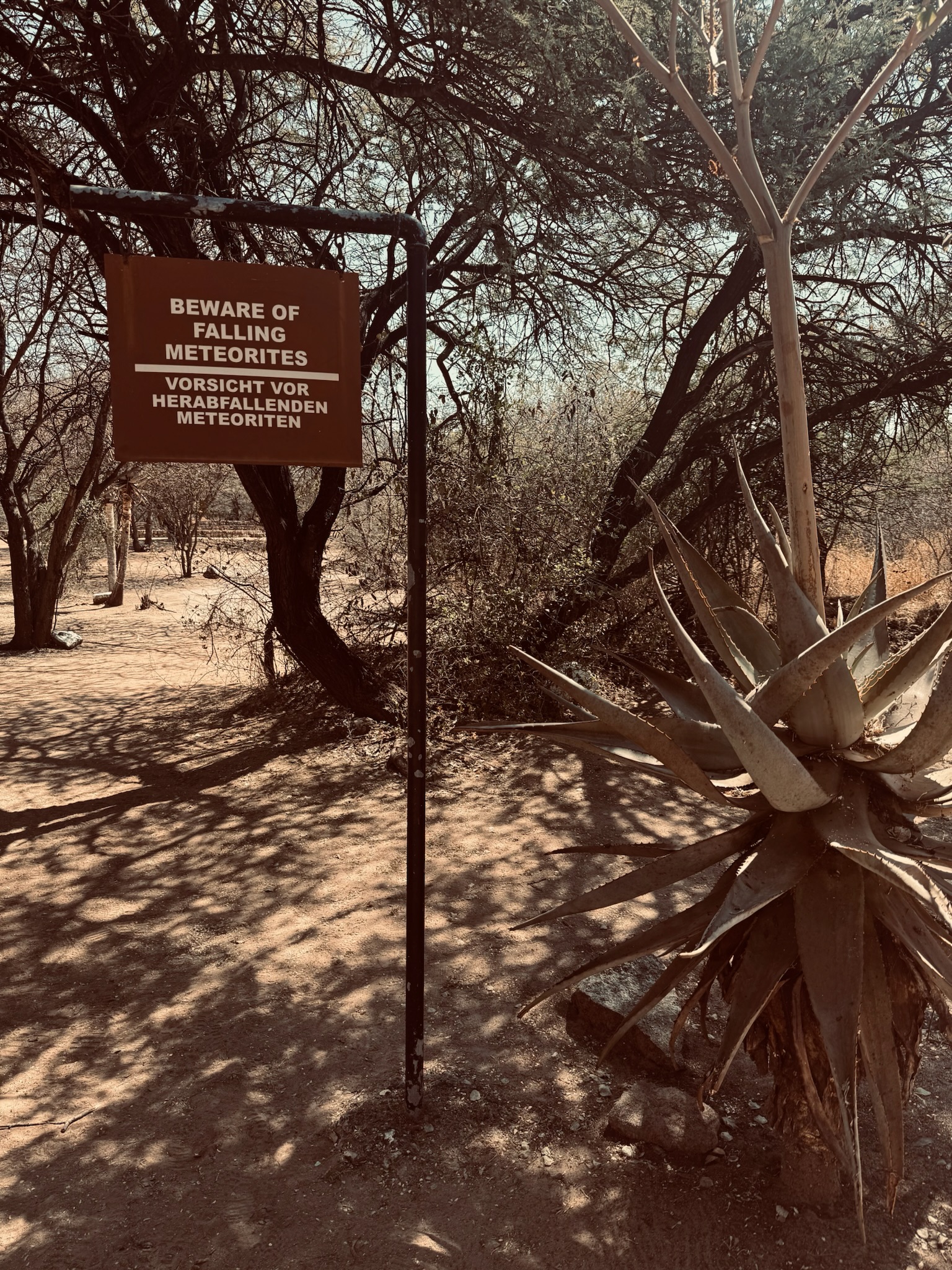
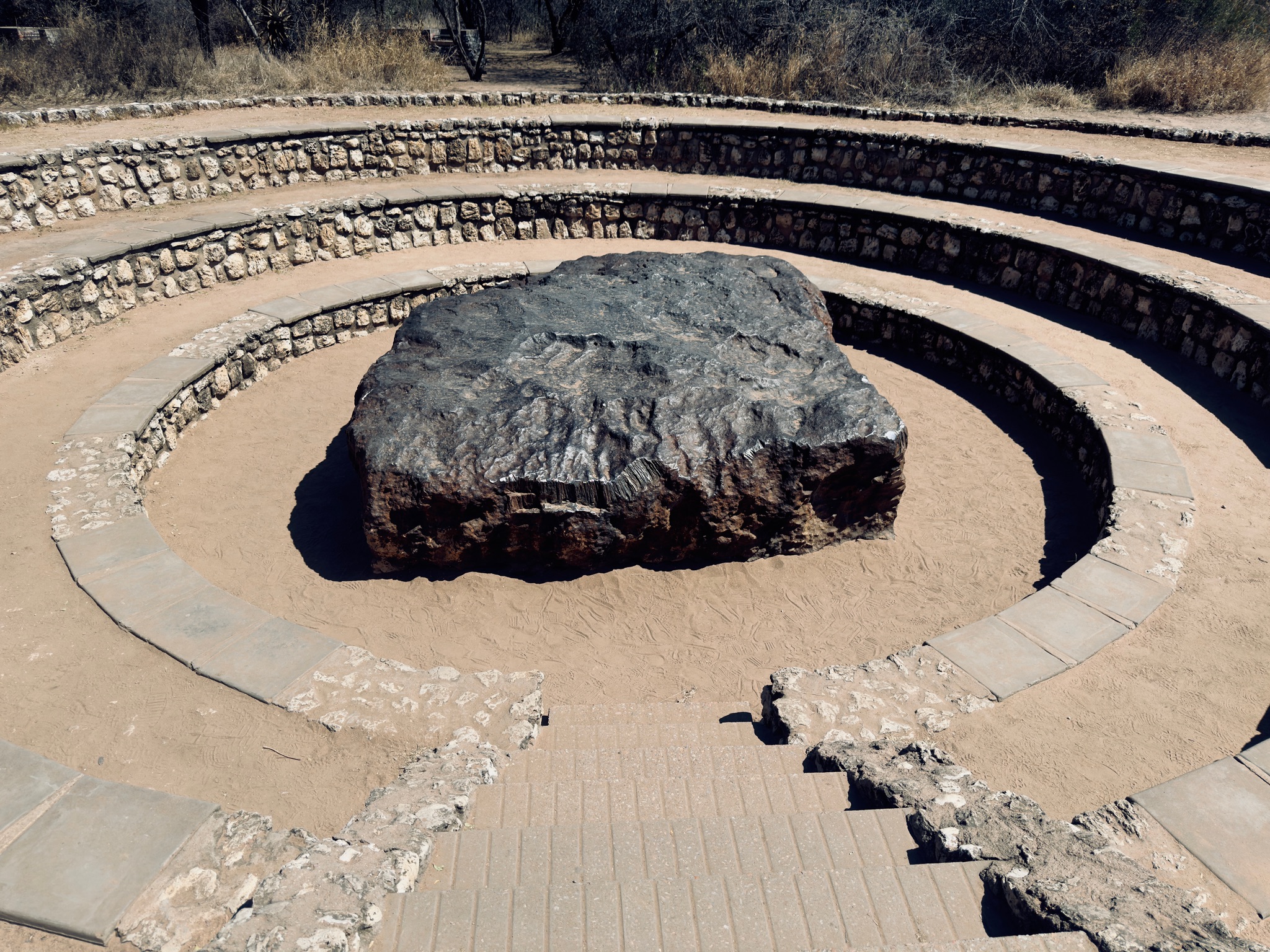
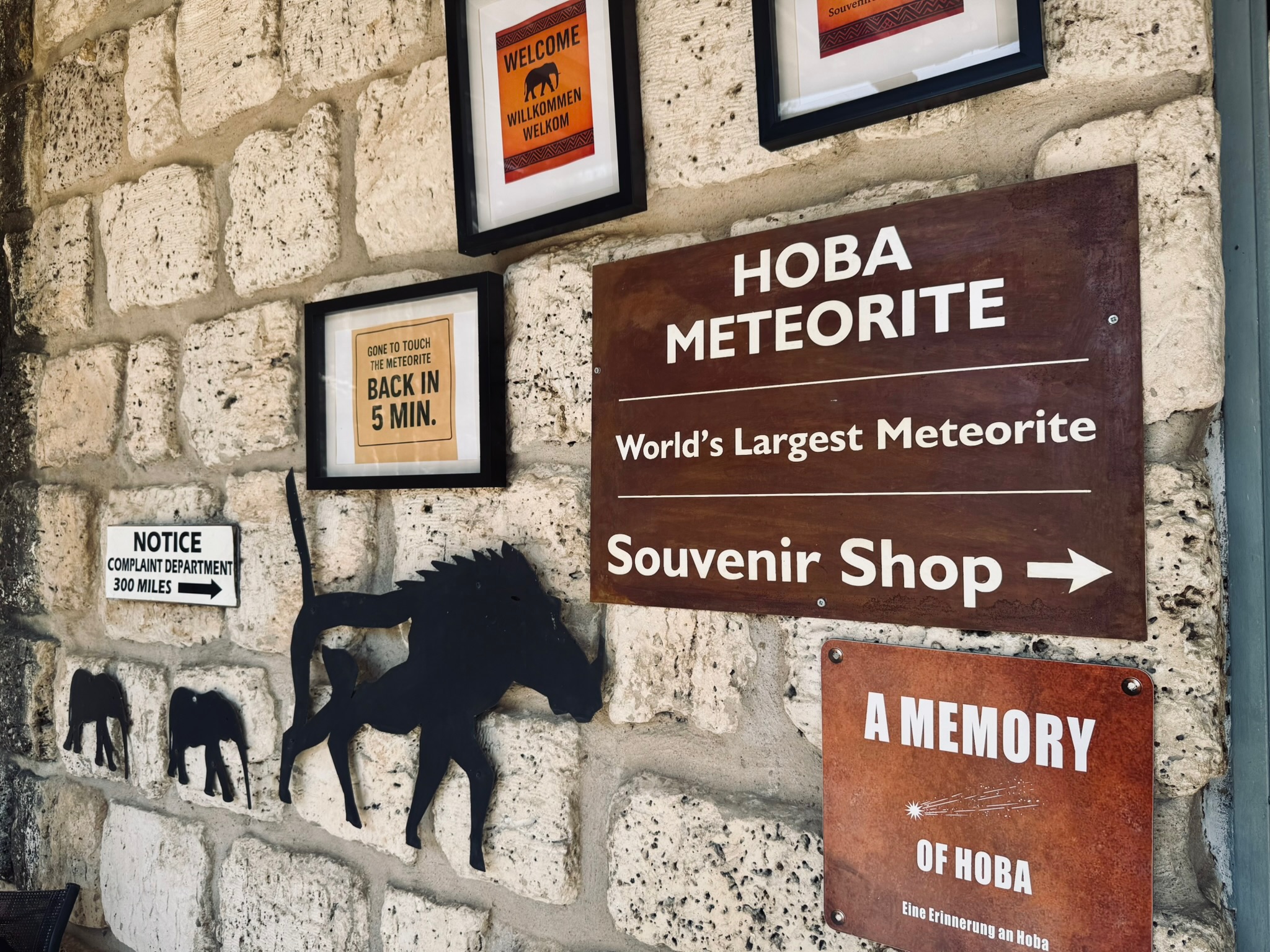
Our only stop was the Hoba Meteorite, outside Grootfontein. A guide walked us through the site and shared the kind of detail that makes you stand there longer than you planned. Lunch at the picnic tables beside it, dishes washed at the taps nearby, then back on the road.
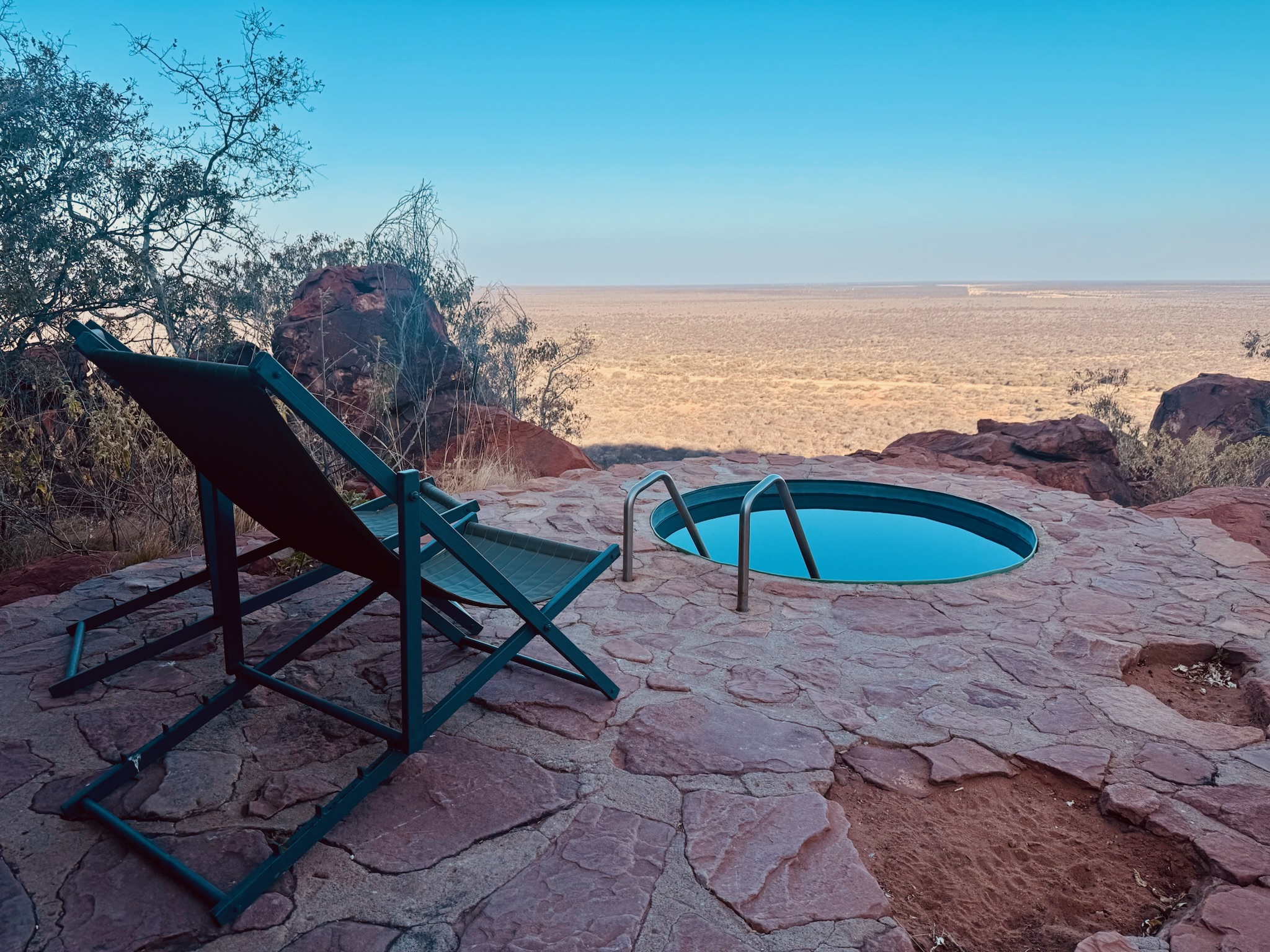
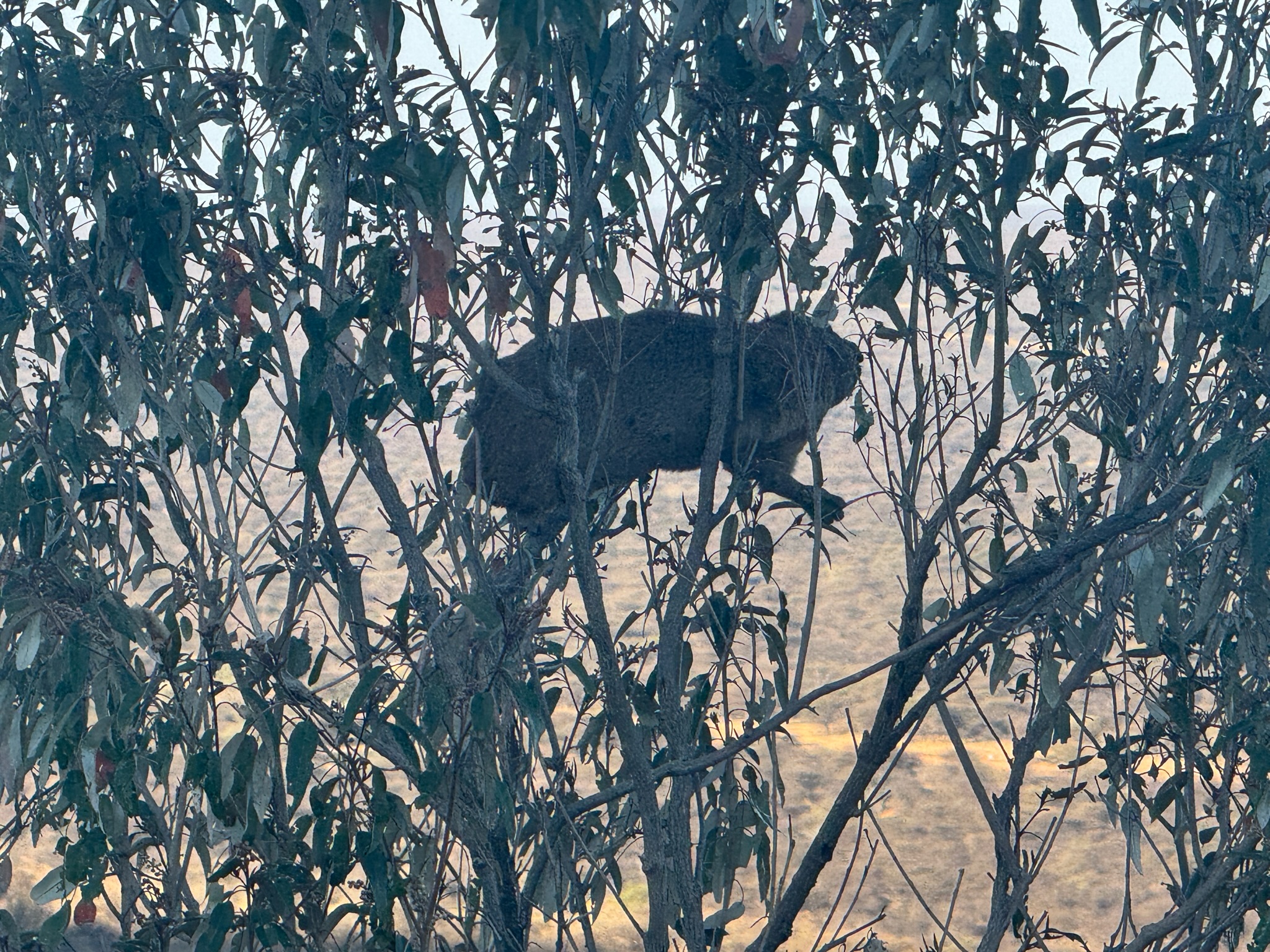
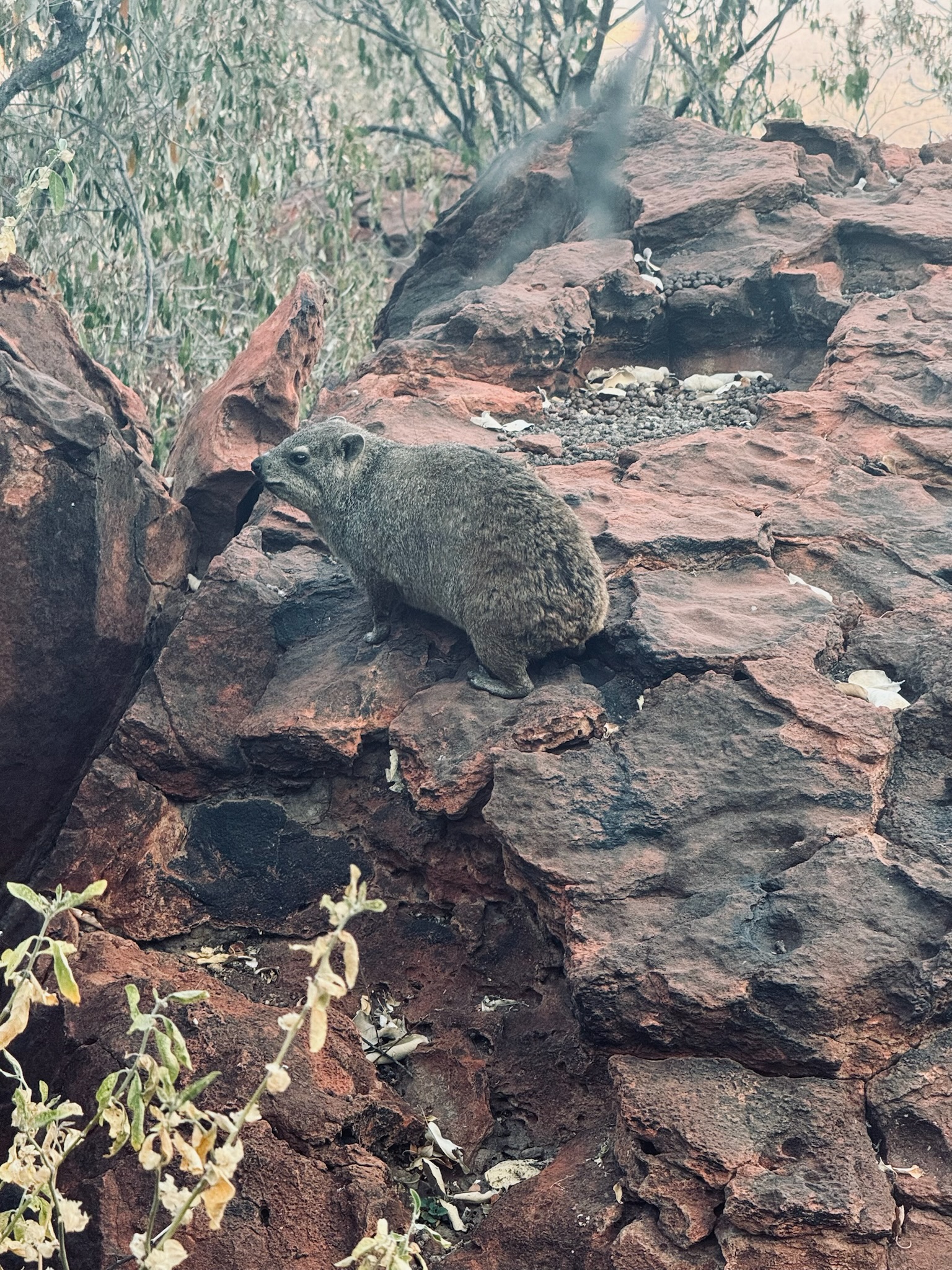
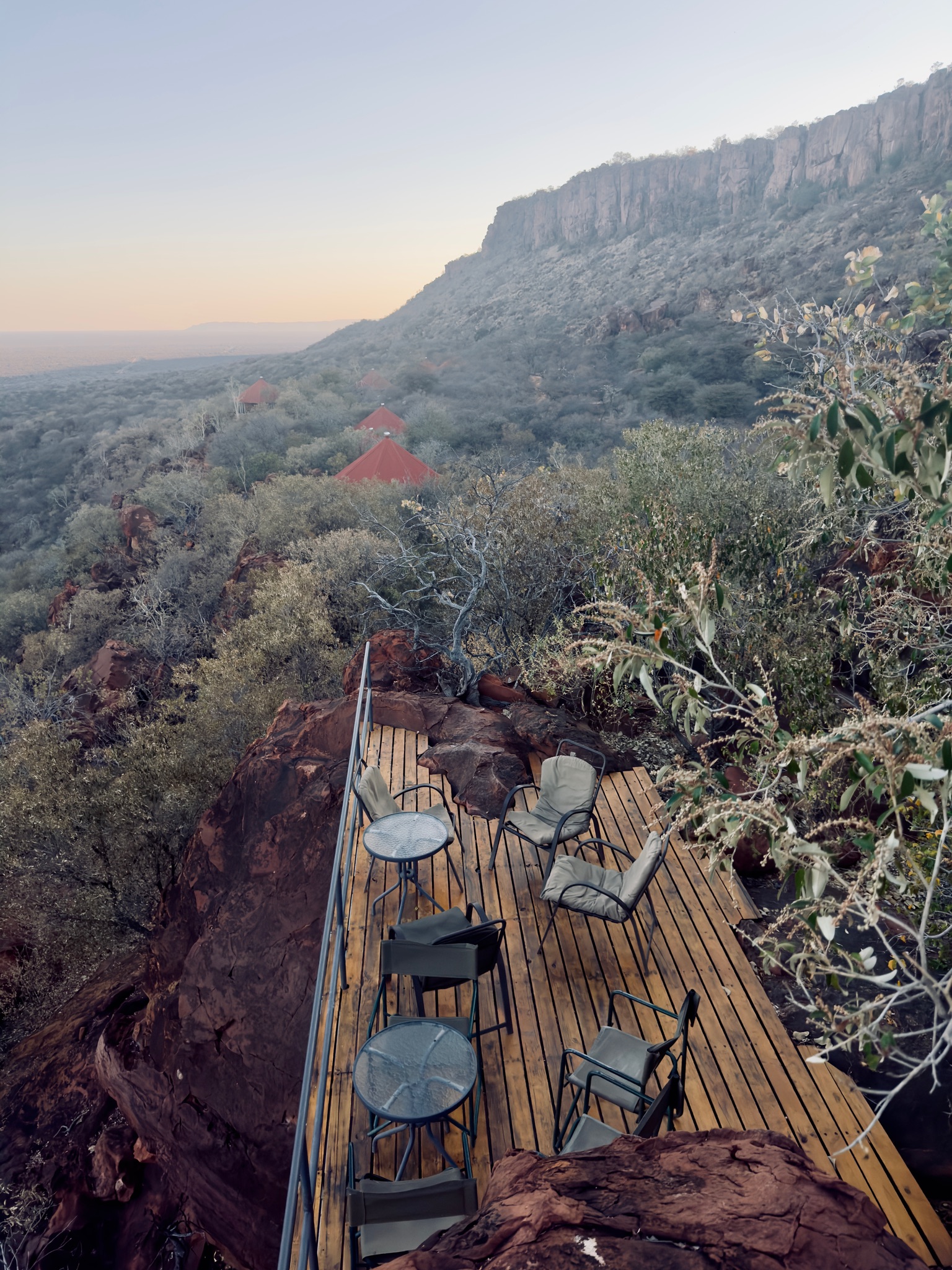
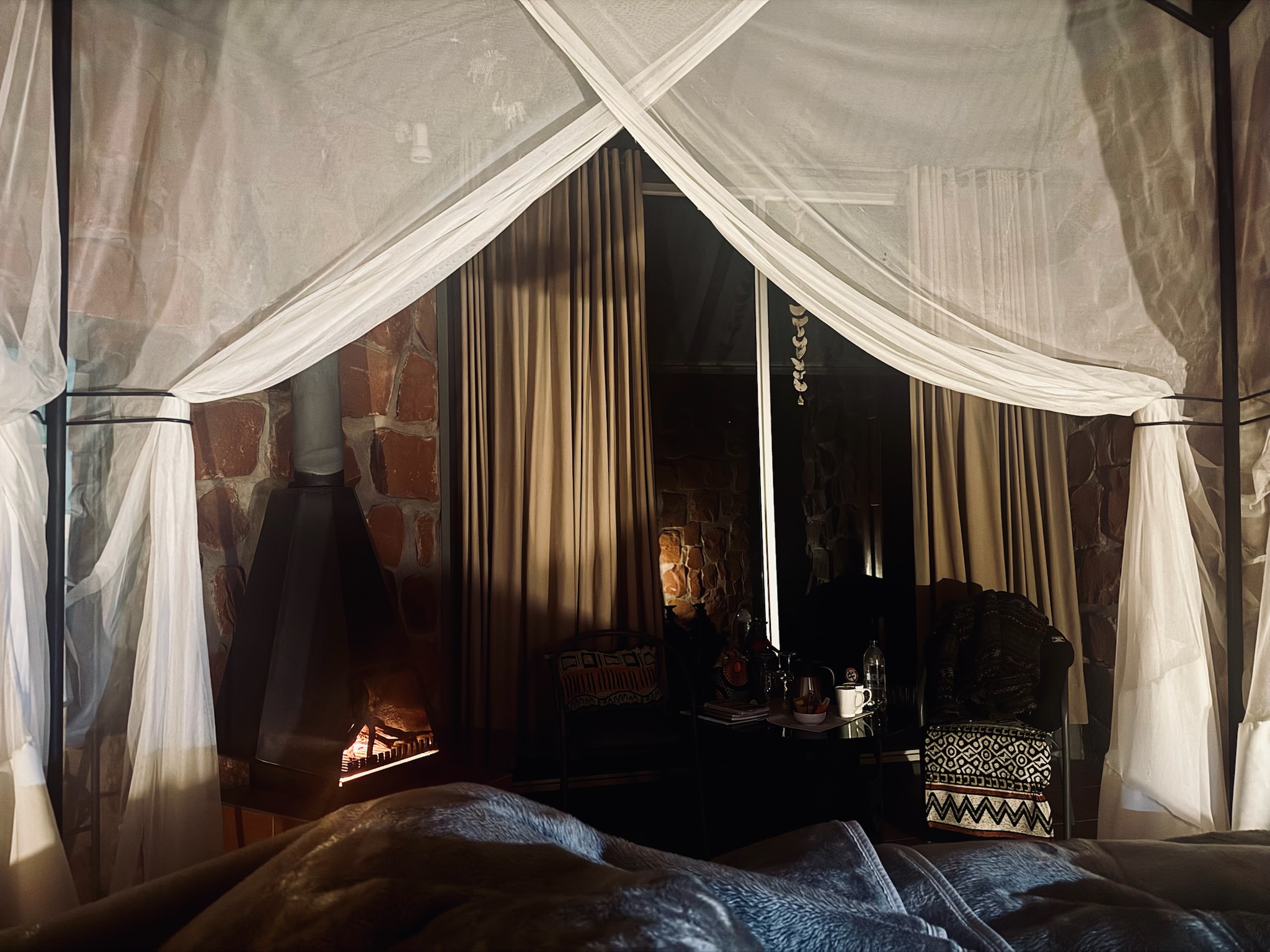
We reached Waterberg Lodge around five. The lodge itself was one of the more striking of the trip — cabins set into the landscape, each with its own view as you stepped outside. What none of us had anticipated was the rock dassies. They were everywhere: around the water tanks beside the cabins, along every path to the restaurant, perched on rocks and walls throughout the grounds. Small, round, entirely unbothered by our presence. At some point a few members of the group noticed them in the trees — plump little animals balanced at the ends of branches at heights that seemed unreasonable for something their size — and then, apparently with no particular concern, simply dropping off. Some jumped, some fell, some seemed to do a combination of both. It was one of the more unexpectedly comic moments of the trip.
Dinner began at seven: a buffet for the main course, with starter and dessert served individually. Our gluten-free needs were handled without any fuss.
Photo of the day
Video
Gallery
Our tips
The Hoba Meteorite site has picnic tables and water taps — a convenient lunch stop if you are on this route. The Waterberg Lodge grounds have rock dassies roaming freely; look out for them in the trees as much as on the ground.
Did you know?
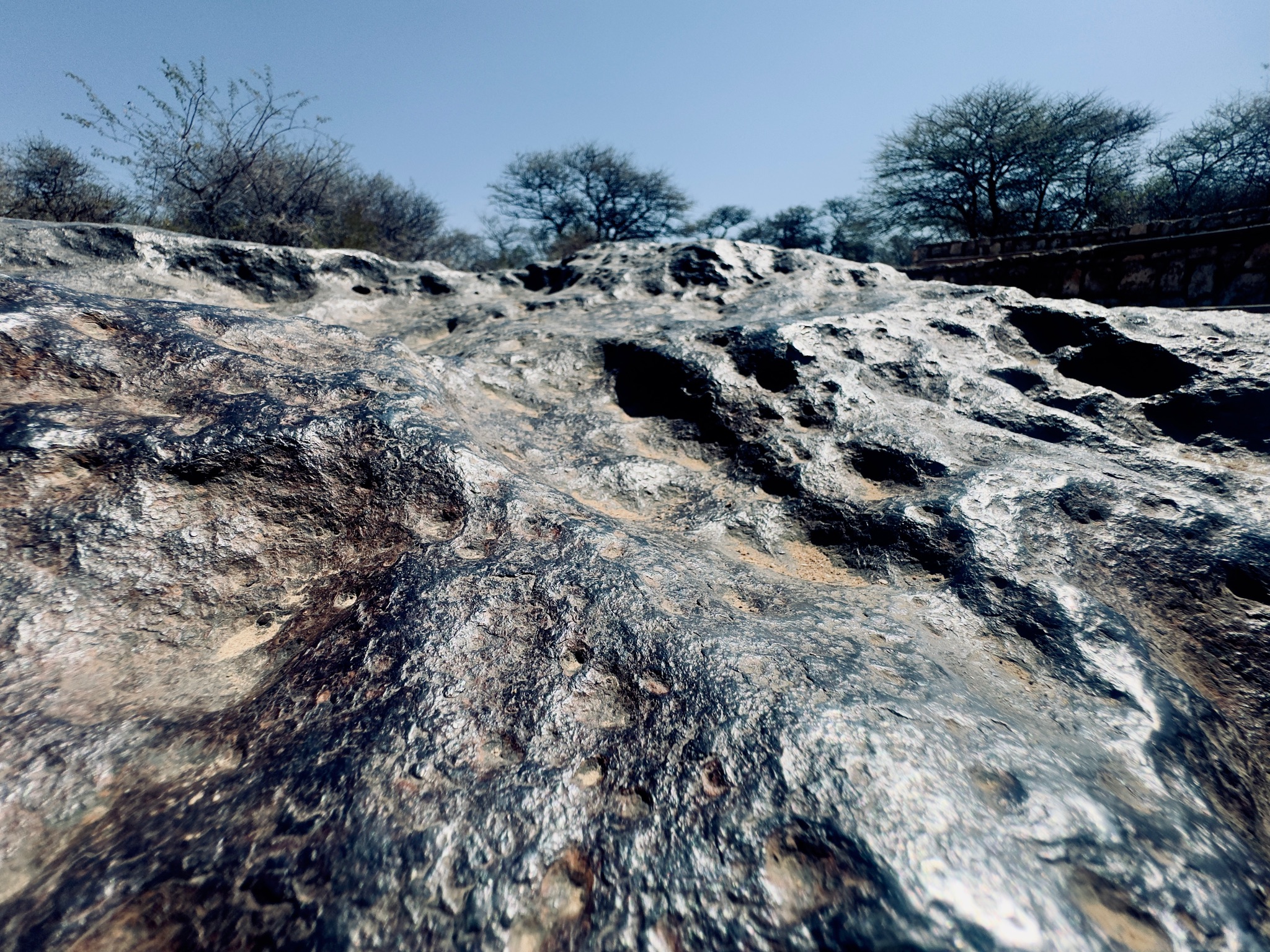
The Hoba Meteorite was discovered in 1920 when a Namibian farmer ploughing a field with an ox heard his plough scrape to a sudden halt against something buried below. What he had found was a slab of iron and nickel roughly three metres by three metres, weighing around 60 tonnes — the largest intact meteorite ever found and the largest single piece of naturally occurring iron on the surface of the Earth. It has never been moved. Not because anyone decided it should stay, but because nothing available could shift it. It also left no crater, which should be impossible for an object of this weight arriving at meteorite speeds. The most likely explanation is that it entered the atmosphere at an extremely shallow angle, slowed almost to a stop before impact, and simply fell to the ground rather than struck it.
Tomorrow we head to...
Day at Waterberg