Route of the day
All points shown were part of the original itinerary. Not all were visited — decisions made along the way are a natural part of any expedition. We kept them on the map in case you wish to explore them yourself.
What we lived
Our last day in Etosha was another full safari day. We had breakfast at Okaukuejo, packed up, and headed out.
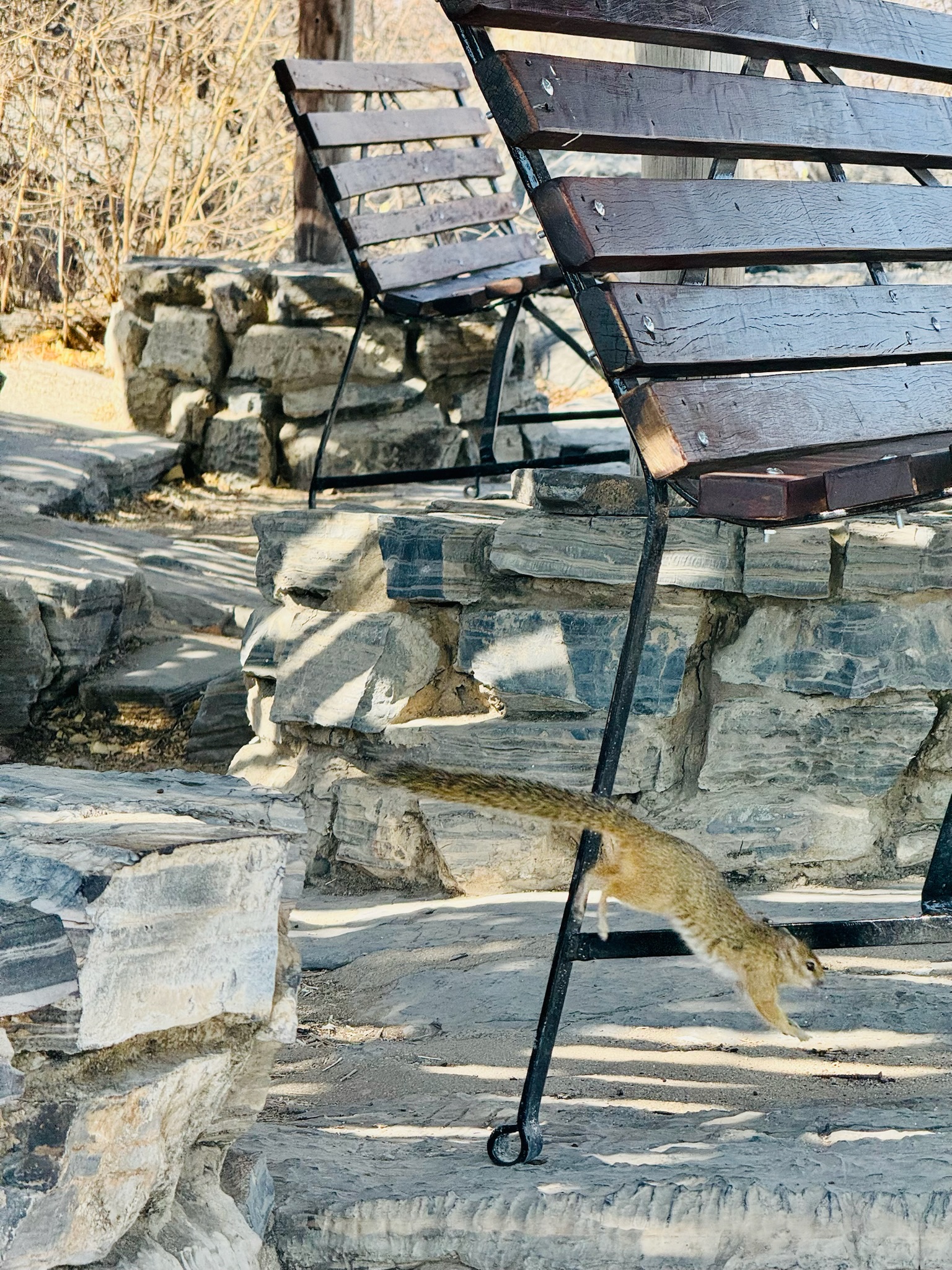
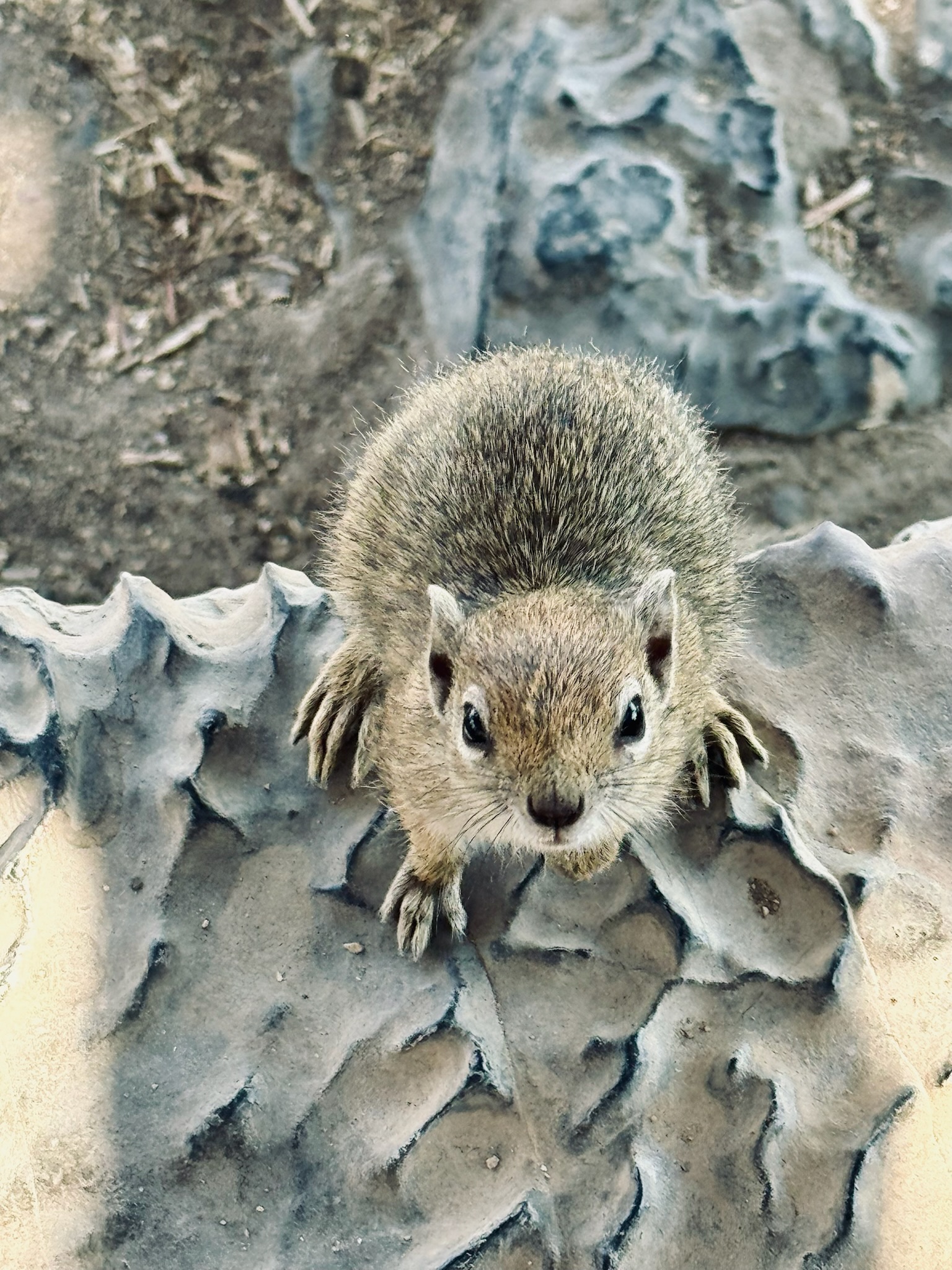
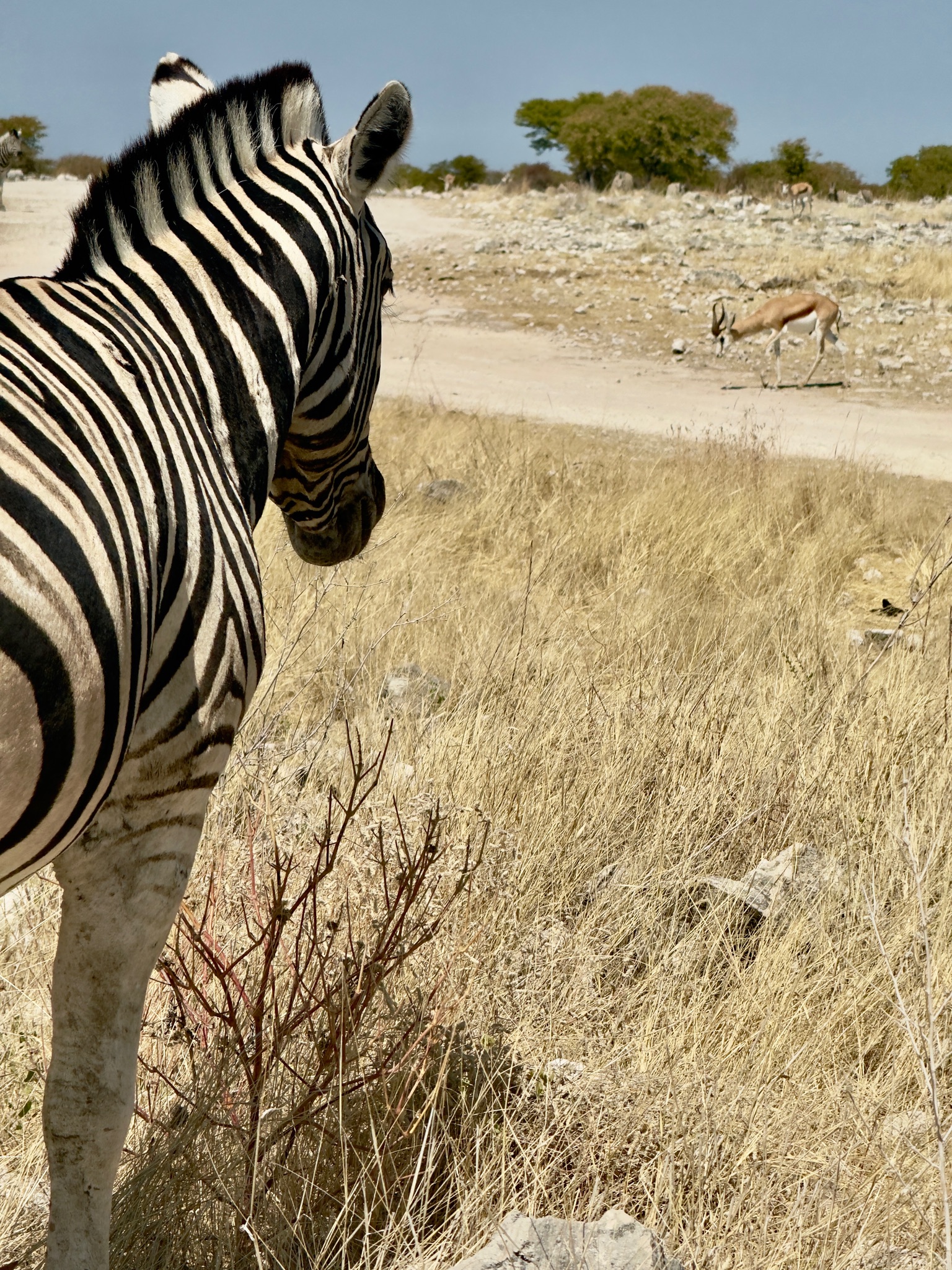
Our first stop was Halali, one of Etosha’s other accommodation areas, mainly for a bathroom break — but Halali also has a waterhole reachable on foot, which we visited. Zebras, assorted antelope, and tree squirrels, a species we hadn’t spotted before.
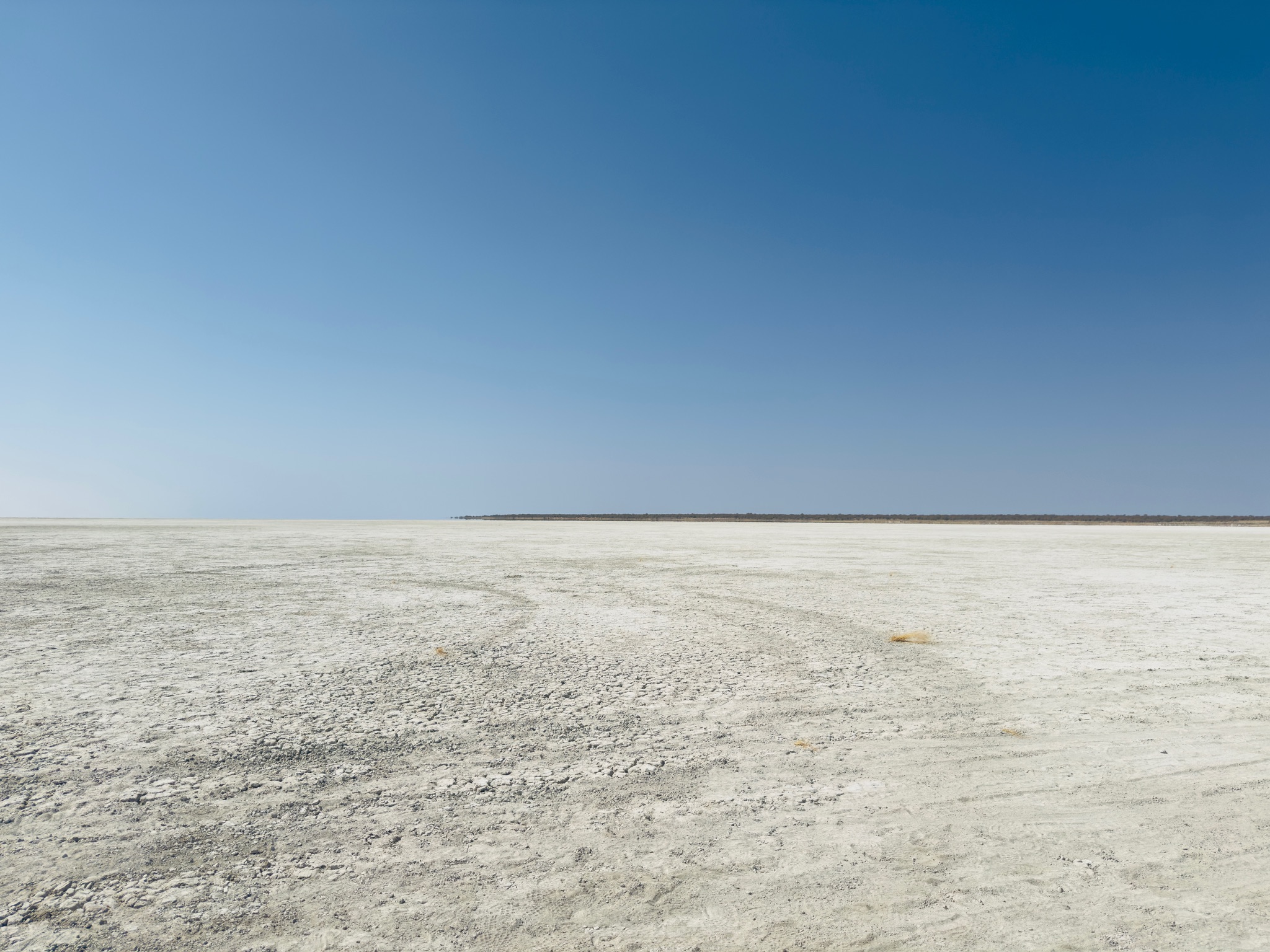
From there we drove out to the Etosha Pan itself — kilometres of flat, blinding white salt, completely empty in every direction. A landscape unlike anything else on the trip.
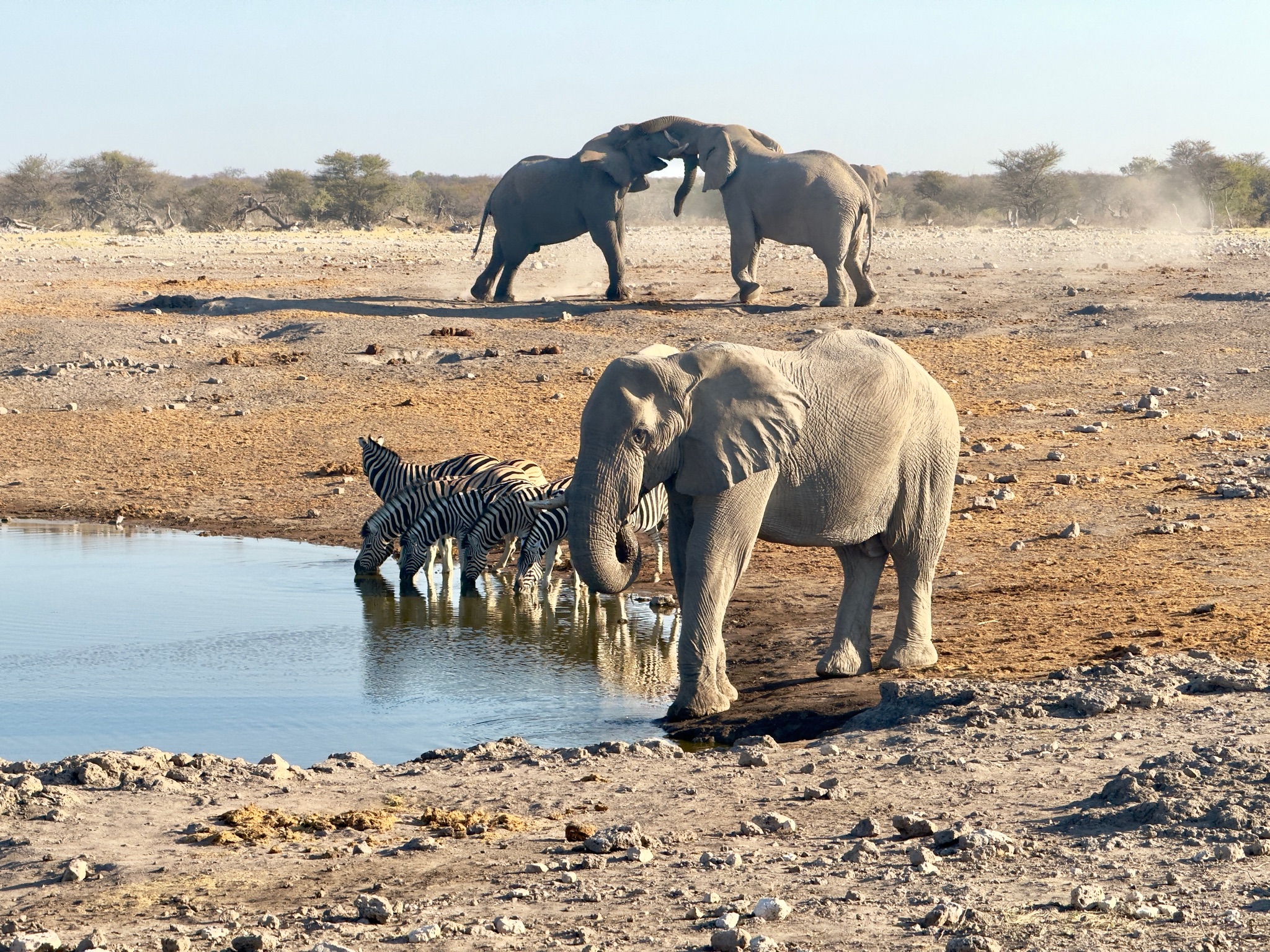
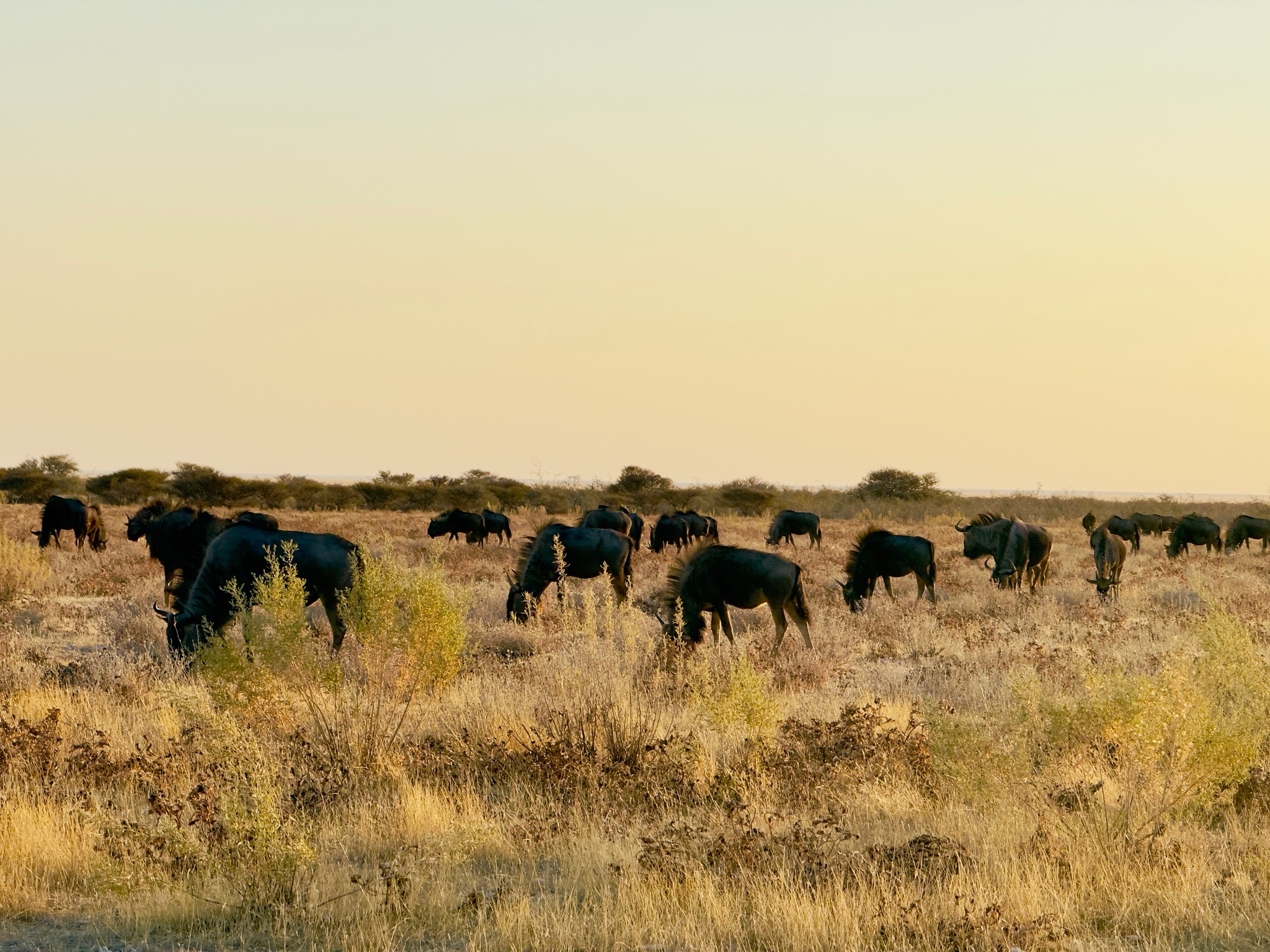
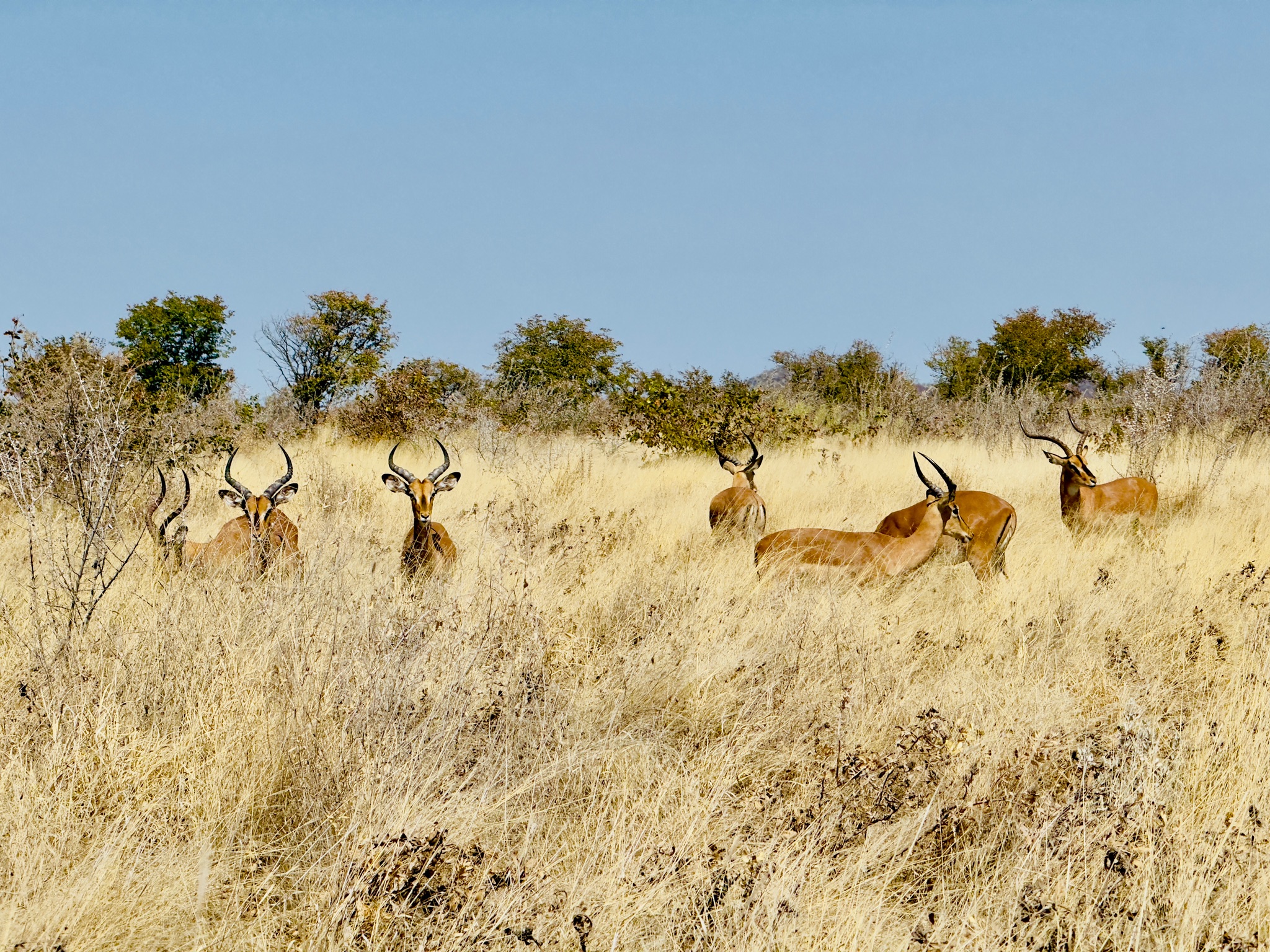
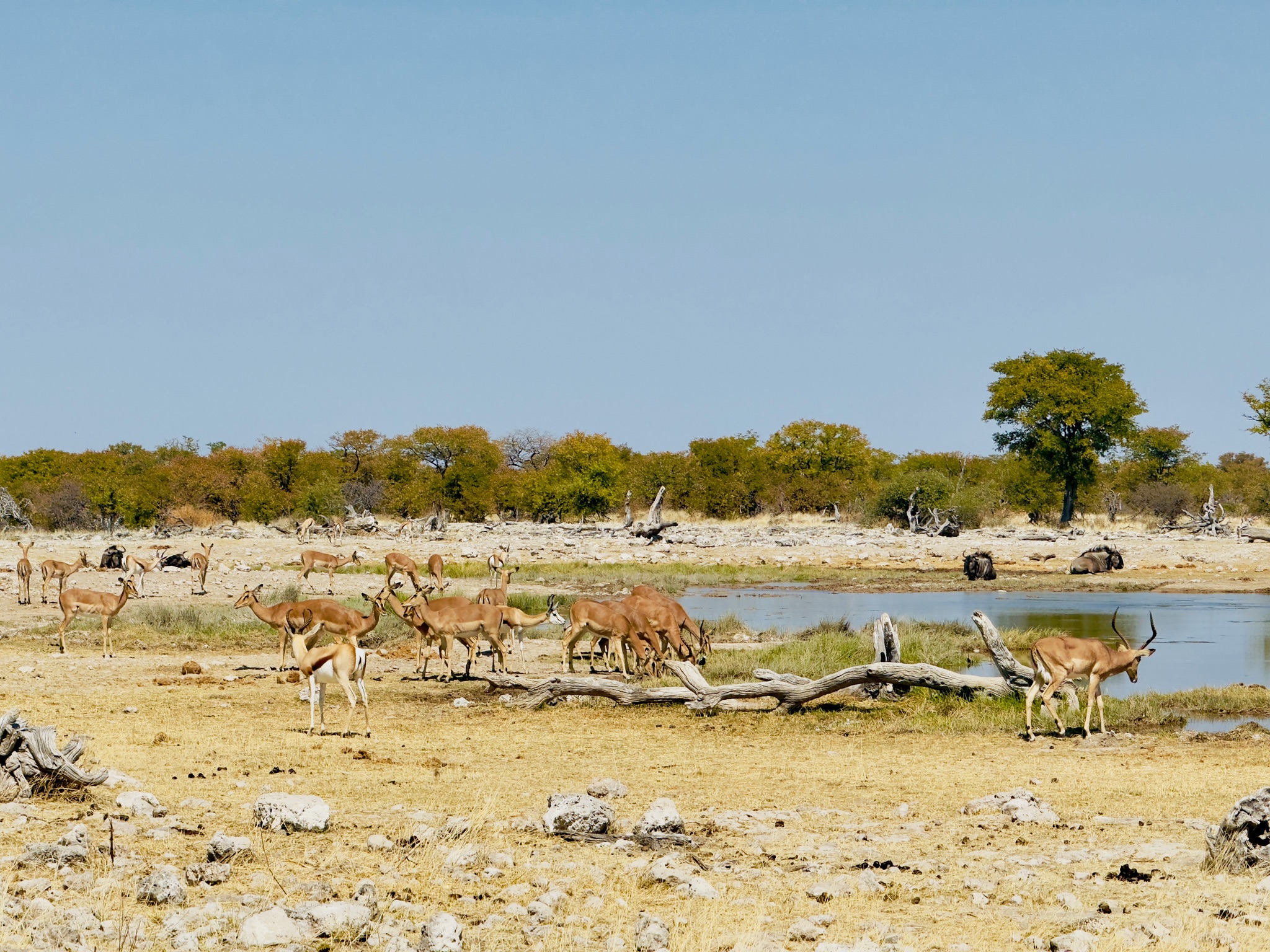
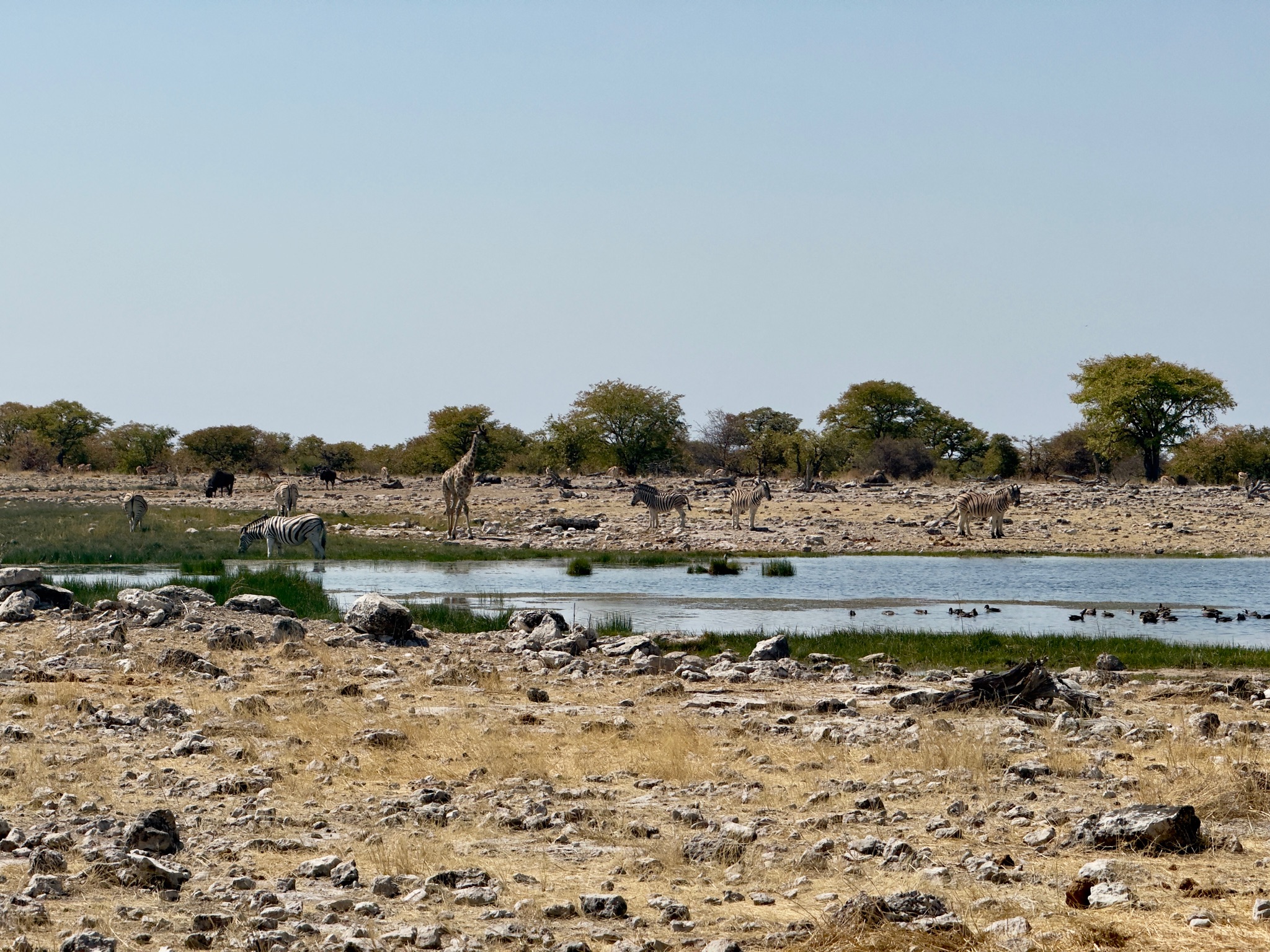
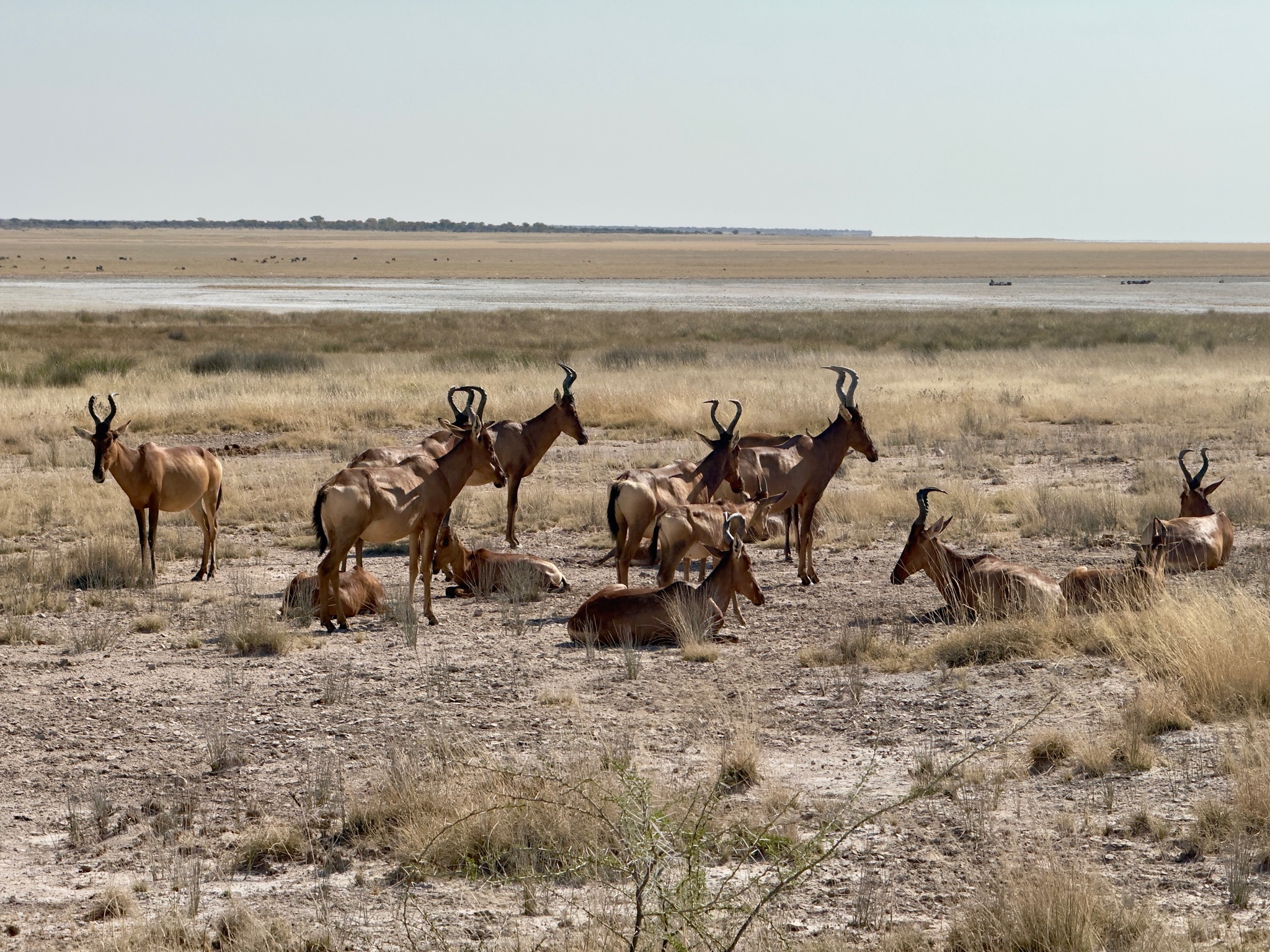
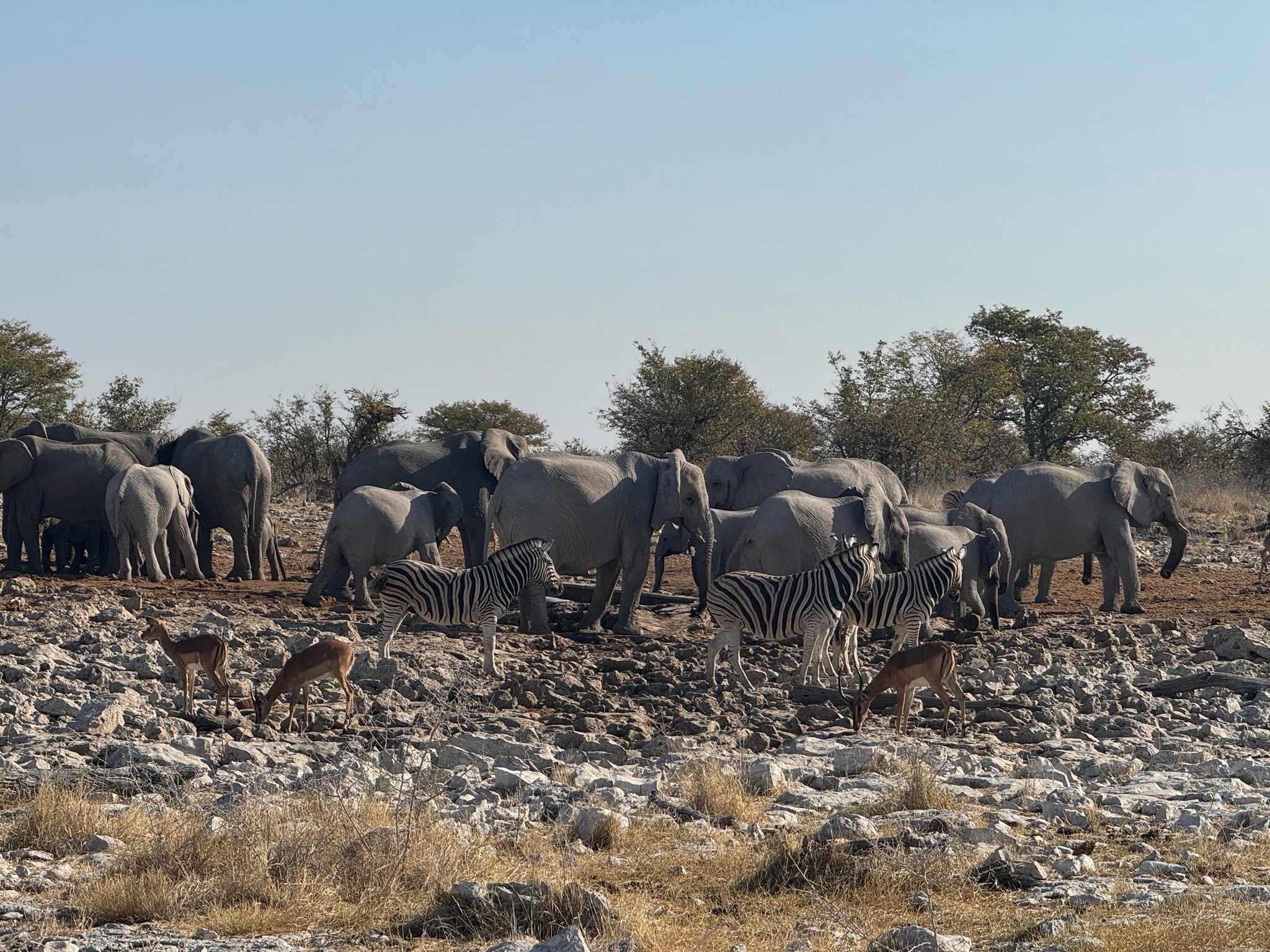
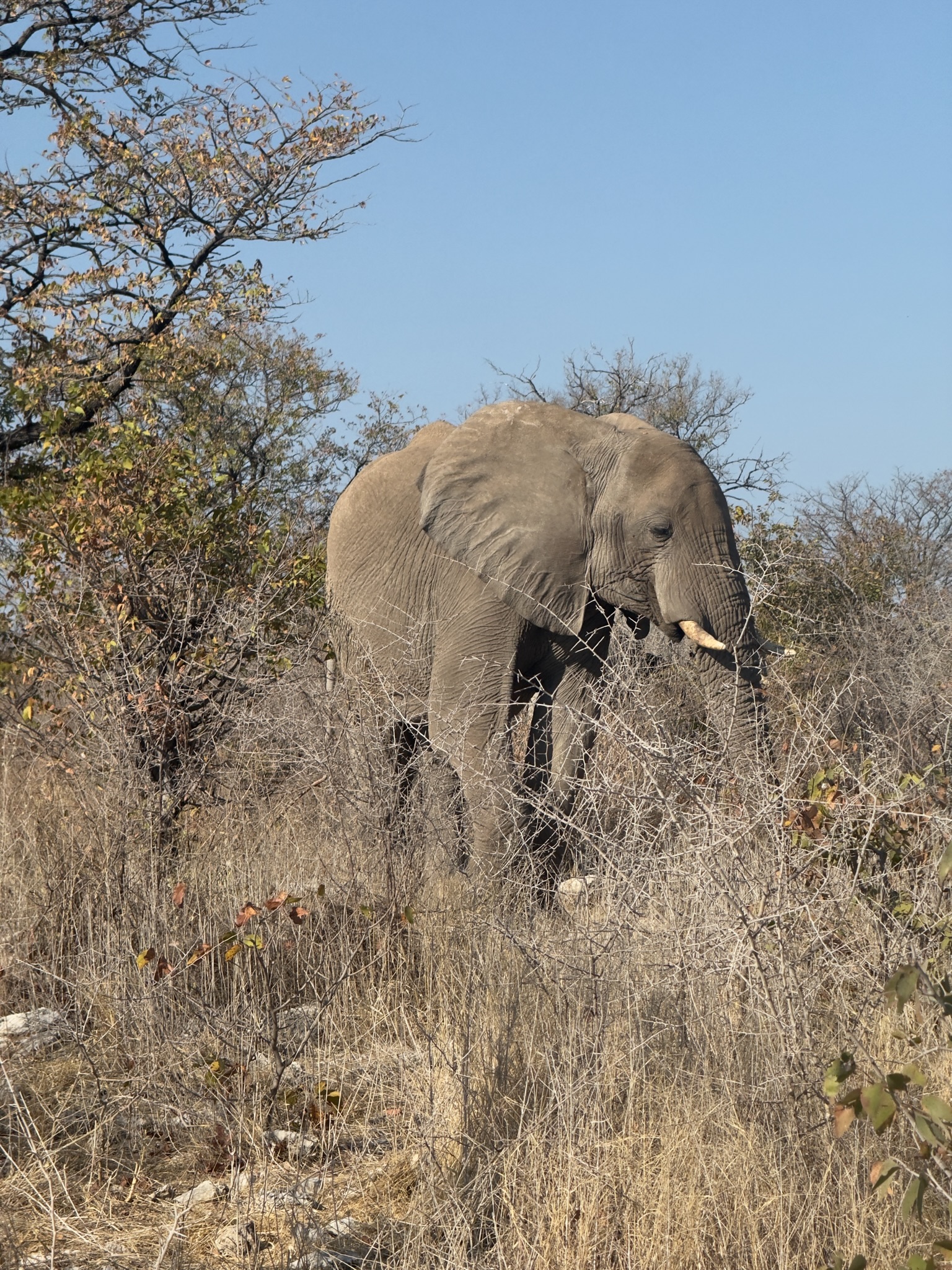
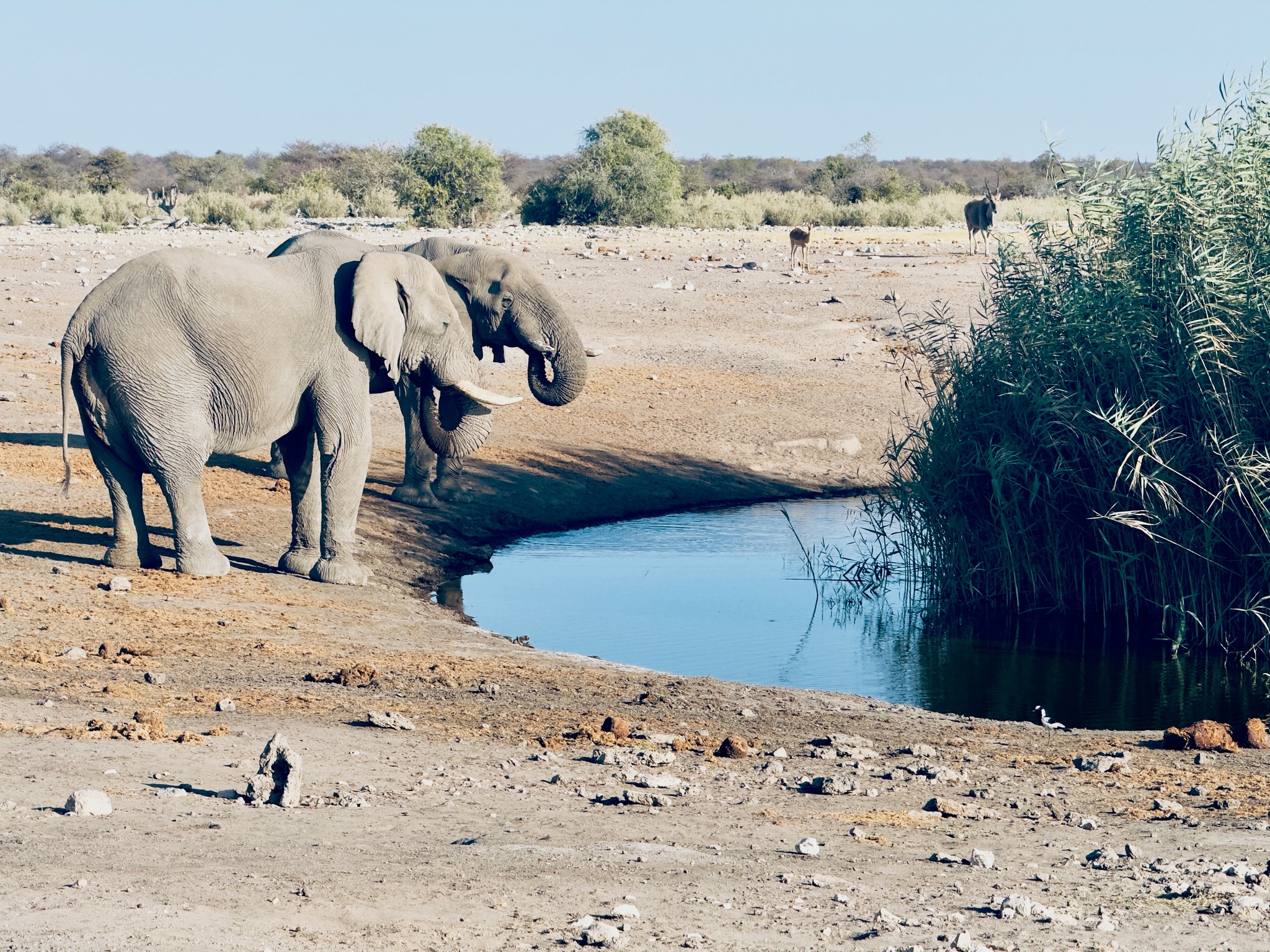
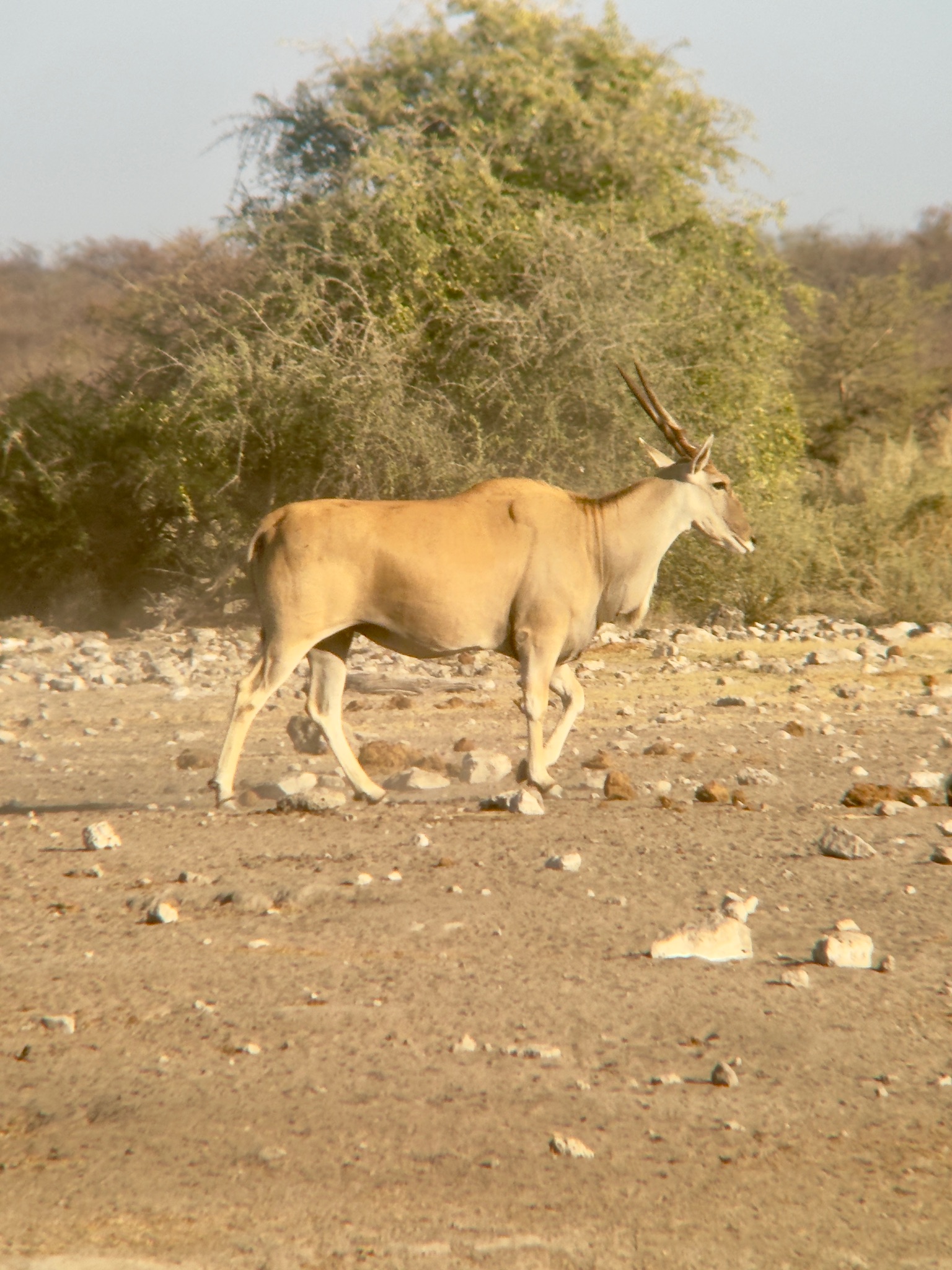
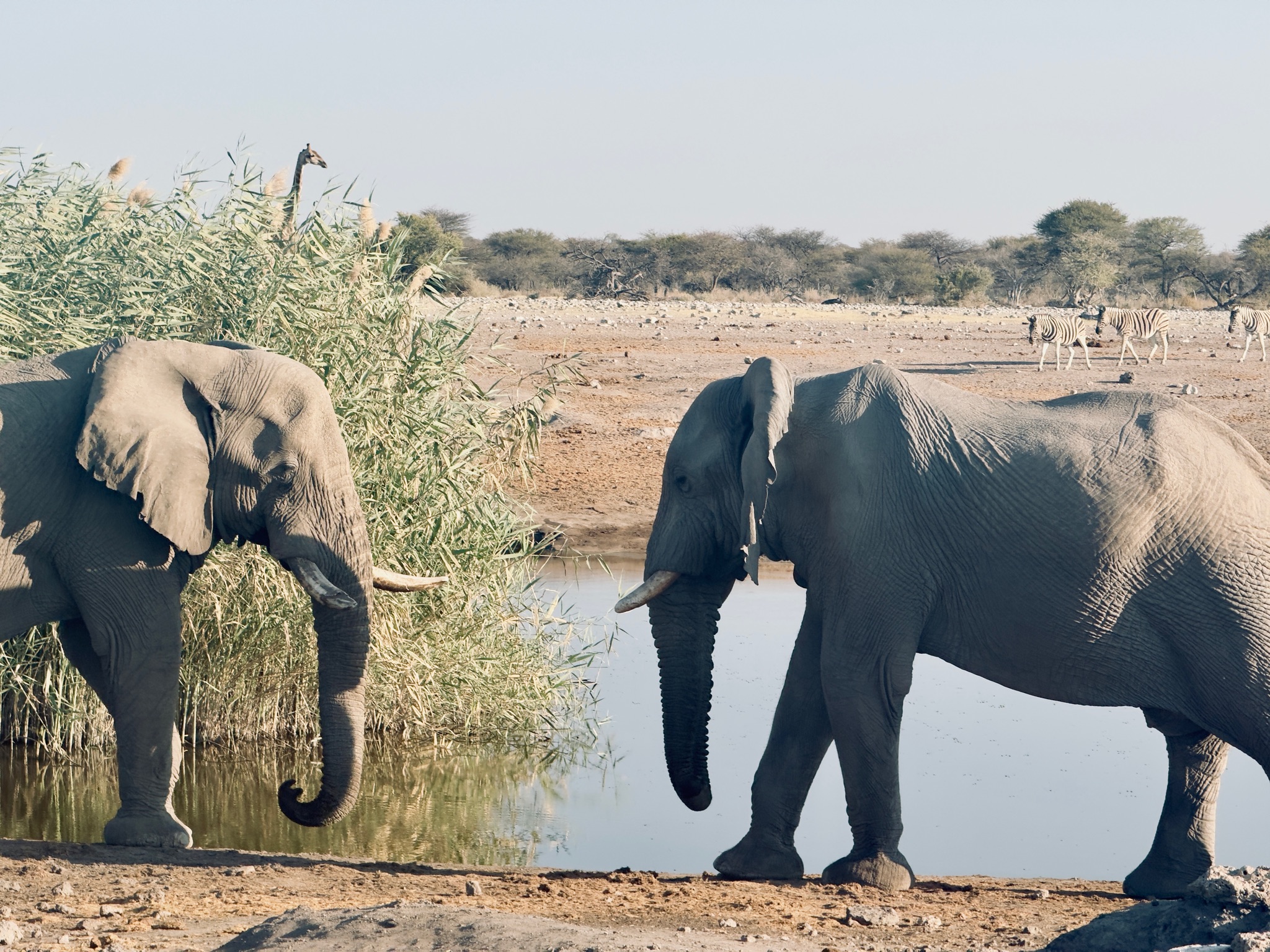
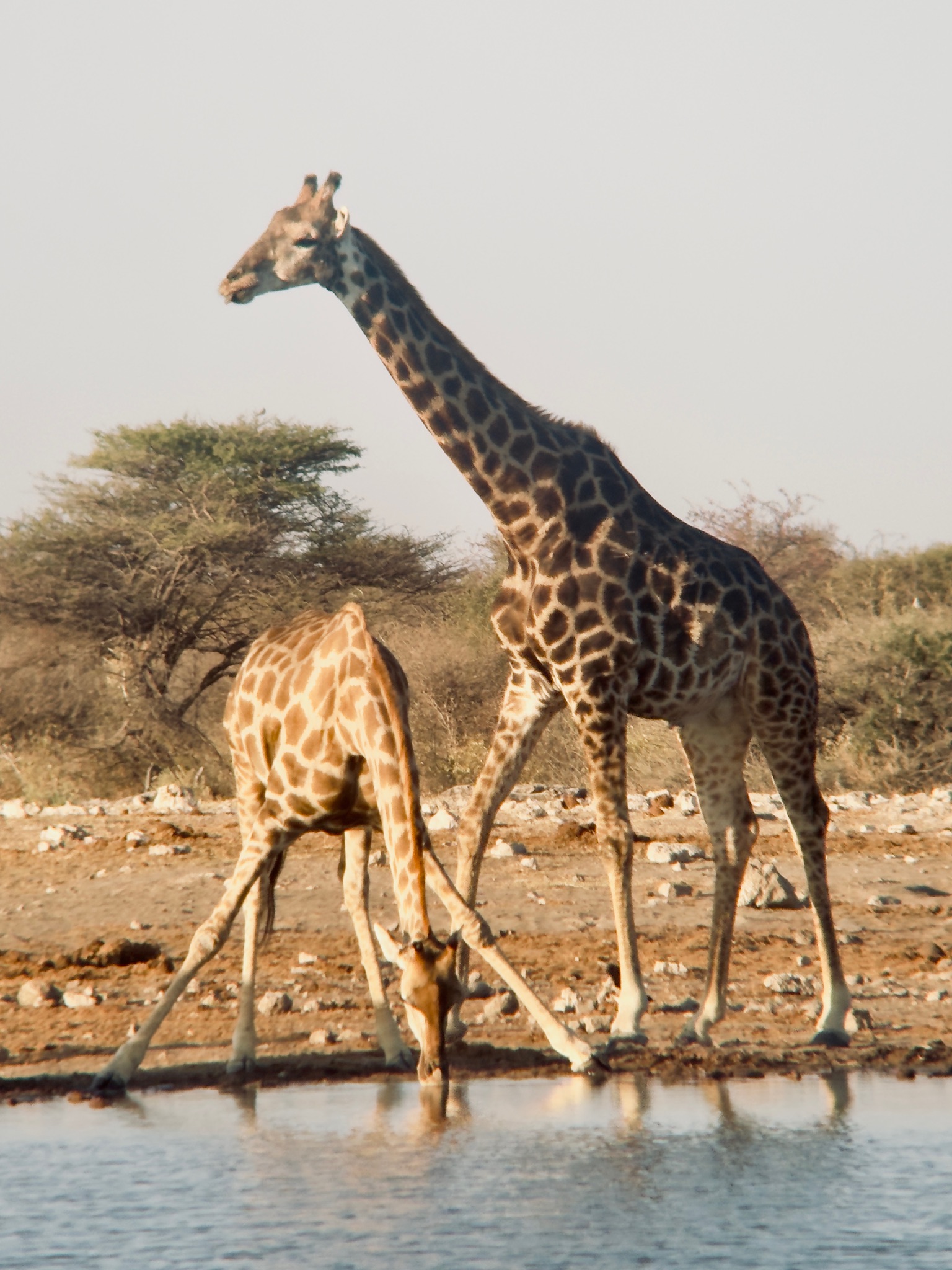
The rest of the day was spent moving between waterholes. Herds of zebra and wildebeest, giraffes, and elephants in various configurations — full families with calves, solitary adult males that live apart from the family groups, and at one point two males sparring. We also added four new antelope species to our list: Damara dik-dik, roan antelope, red hartebeest, and steenbok. Lunch was at the Springbok Container rest stop, and we spent the afternoon on safari until it was time to leave.
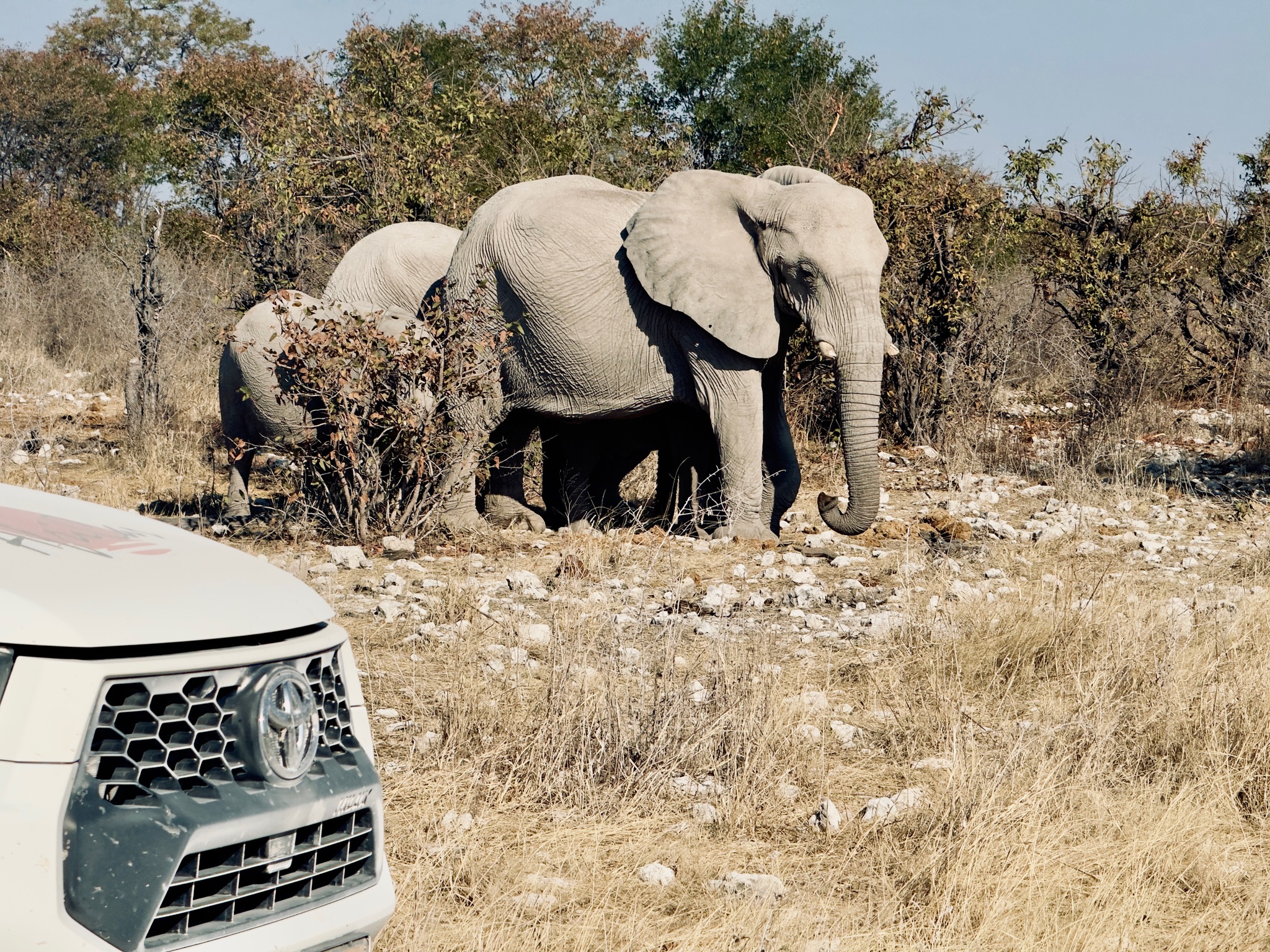
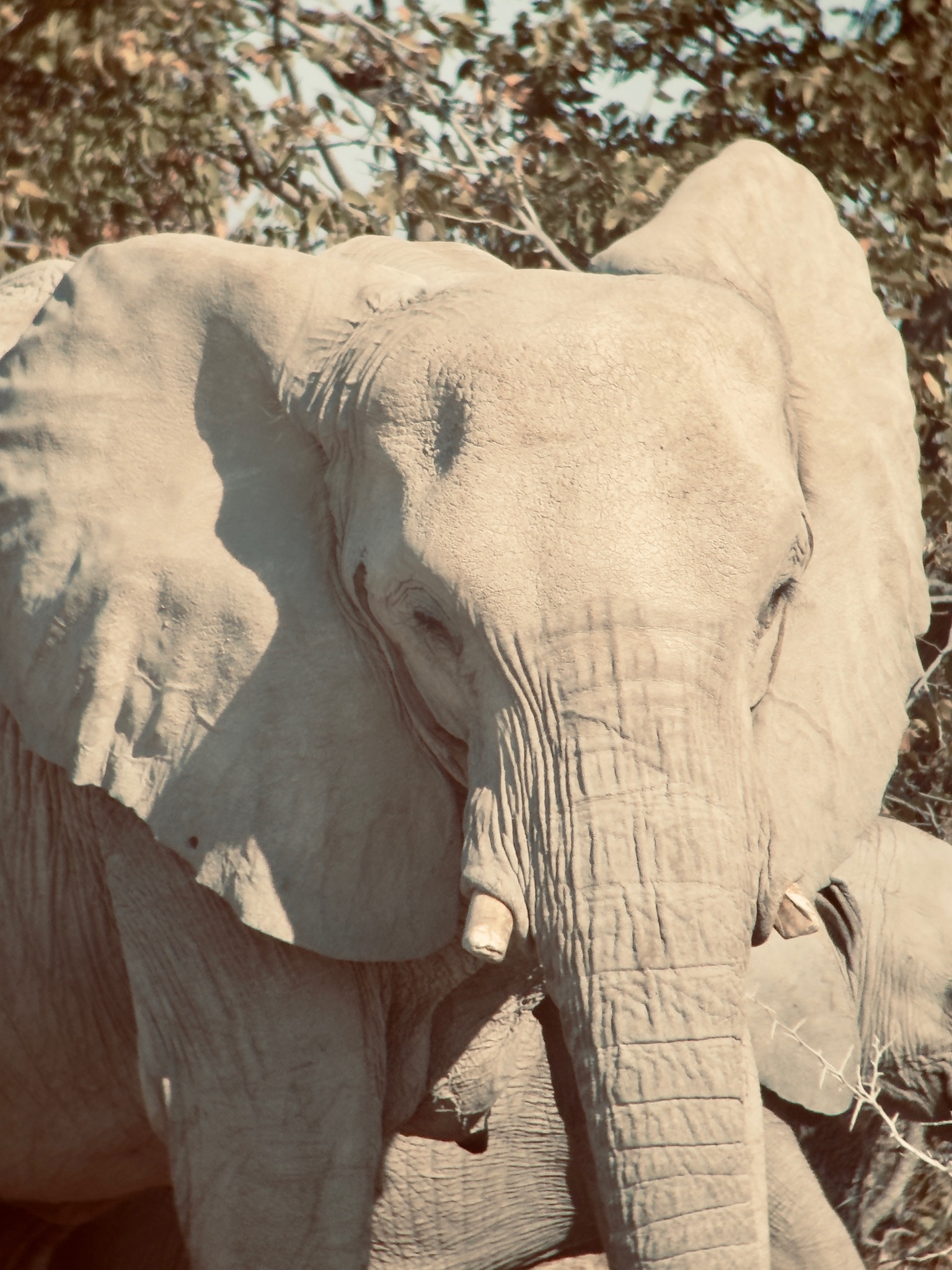
Near the park exit, the last car in our convoy came around a bend to find a group of elephants wanting to cross the road. The mother turned and fixed the car with a long, direct stare — then began walking toward it. There was no hesitation: reverse gear, distance, and we waited while the family crossed. It was entirely clear who had the right of way.
We left Etosha around six and reached Mushara Lodge just outside the gate. The staff handled our gluten-free requirements with genuine care, and dinner was excellent.
Photo of the day
Video
Video
Gallery
Our tips
The Halali waterhole is walkable from the rest camp and often overlooked — worth a short stop. Leave Etosha with enough time to reach your next lodge before dark; driving after sunset on Namibian roads remains dangerous.
Did you know?
The Damara dik-dik — one of Africa’s smallest antelopes, standing barely 40 centimetres at the shoulder — is one of the few genuinely monogamous mammals in the wild. Pairs bond for life, sharing and defending a fixed territory together. They mark the boundaries of that territory using secretions from their preorbital glands — in other words, with their tears. If one partner dies, the survivor will eventually find another solitary individual and start again.
Tomorrow we head to...
Tsumeb and Waterberg